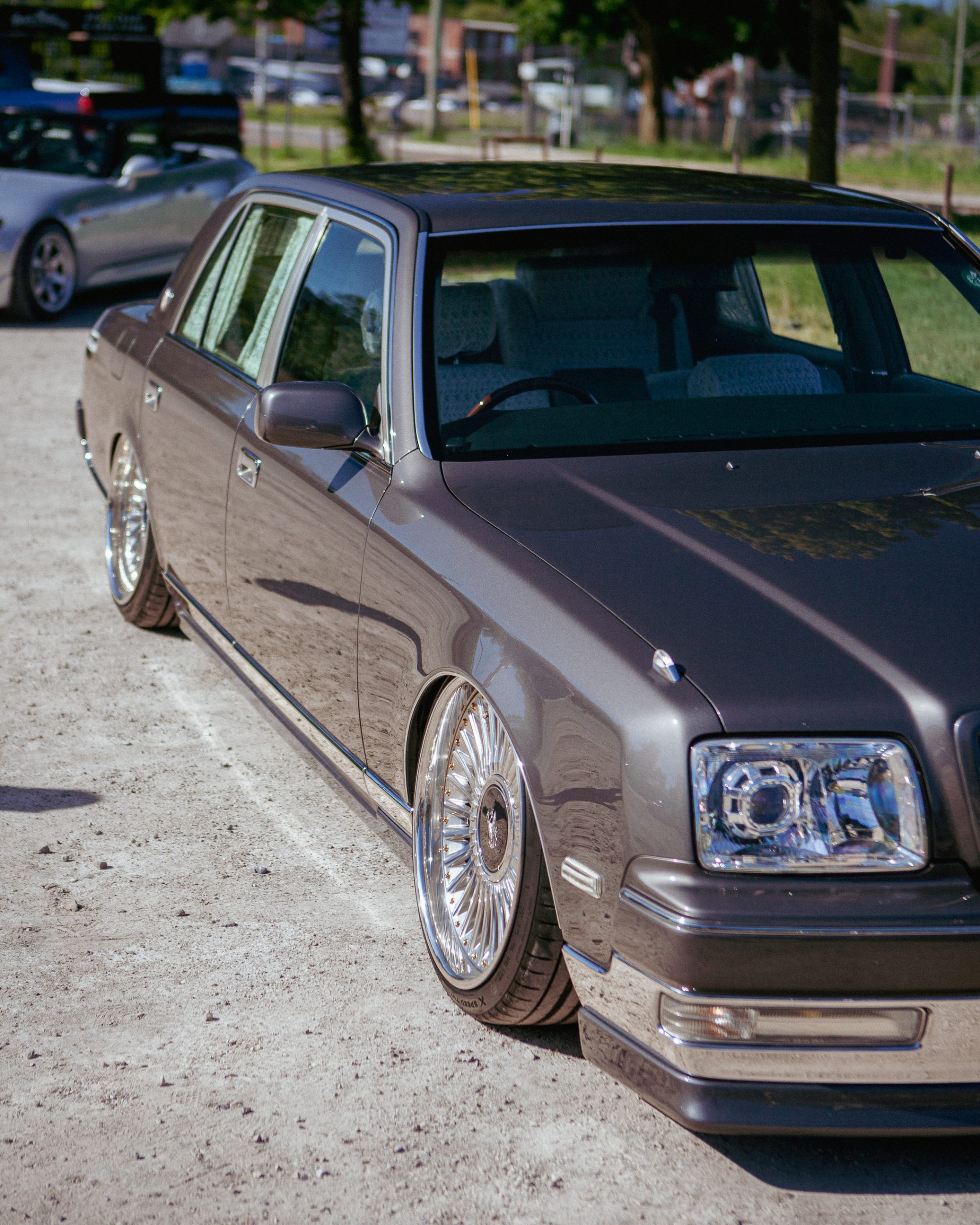
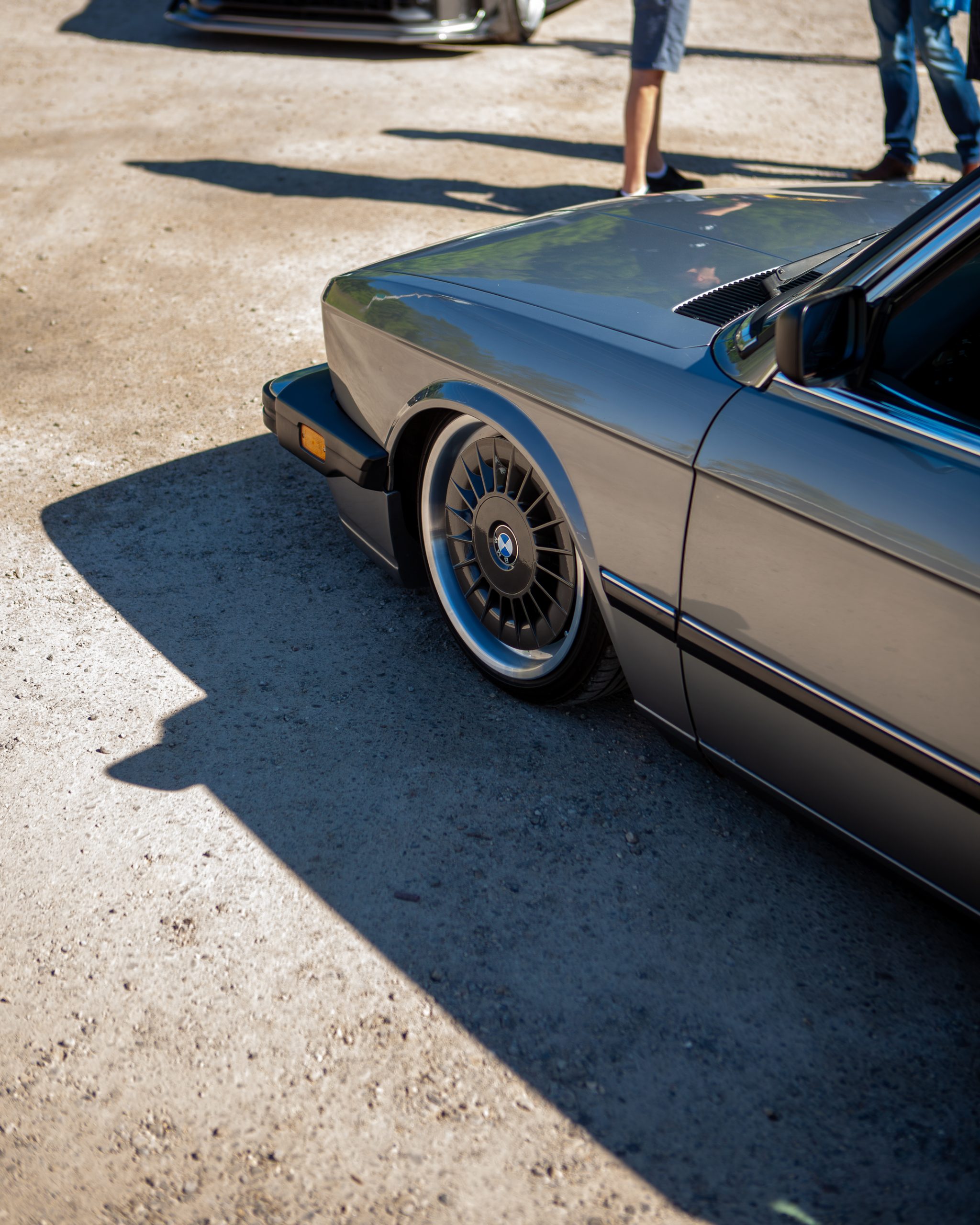
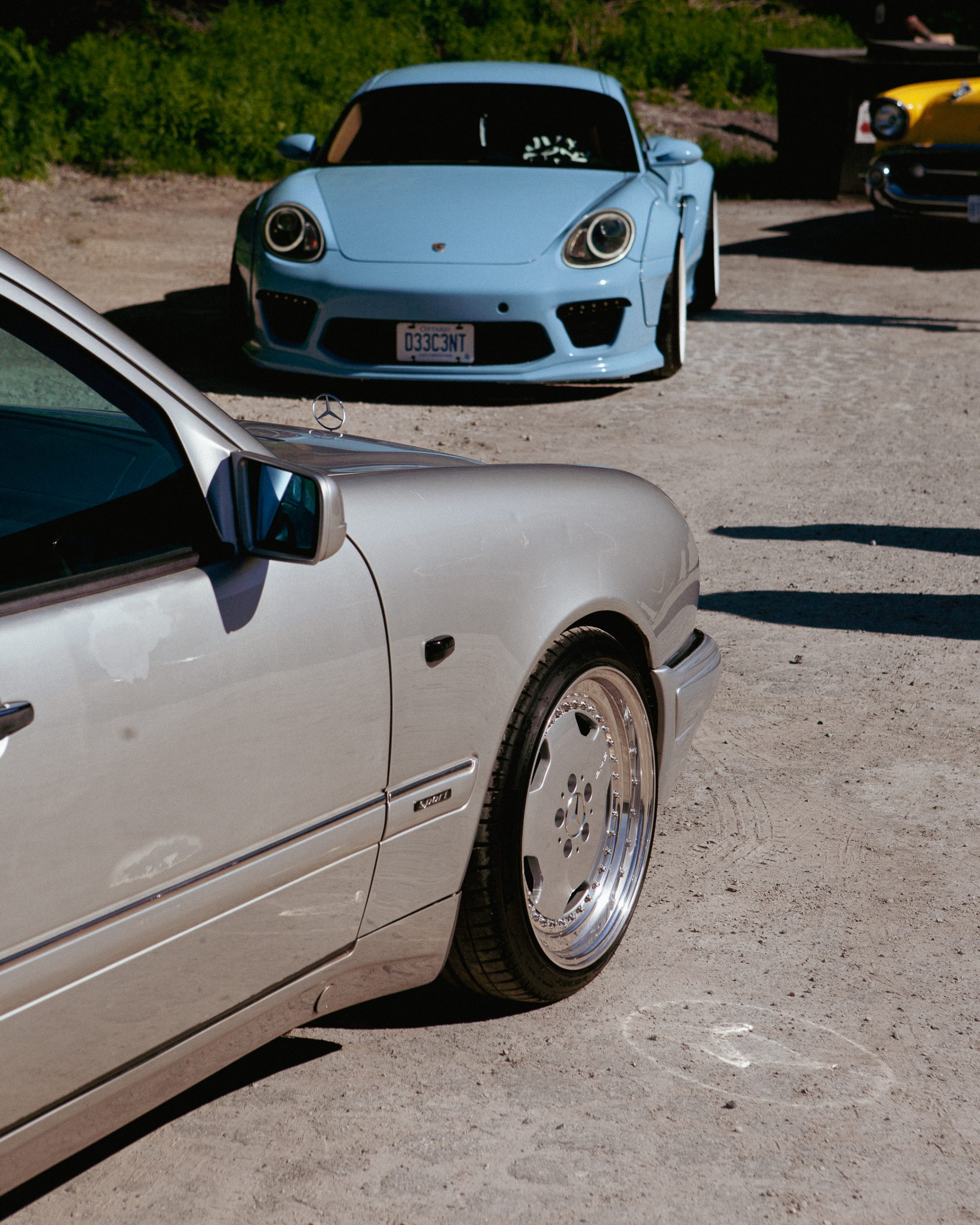
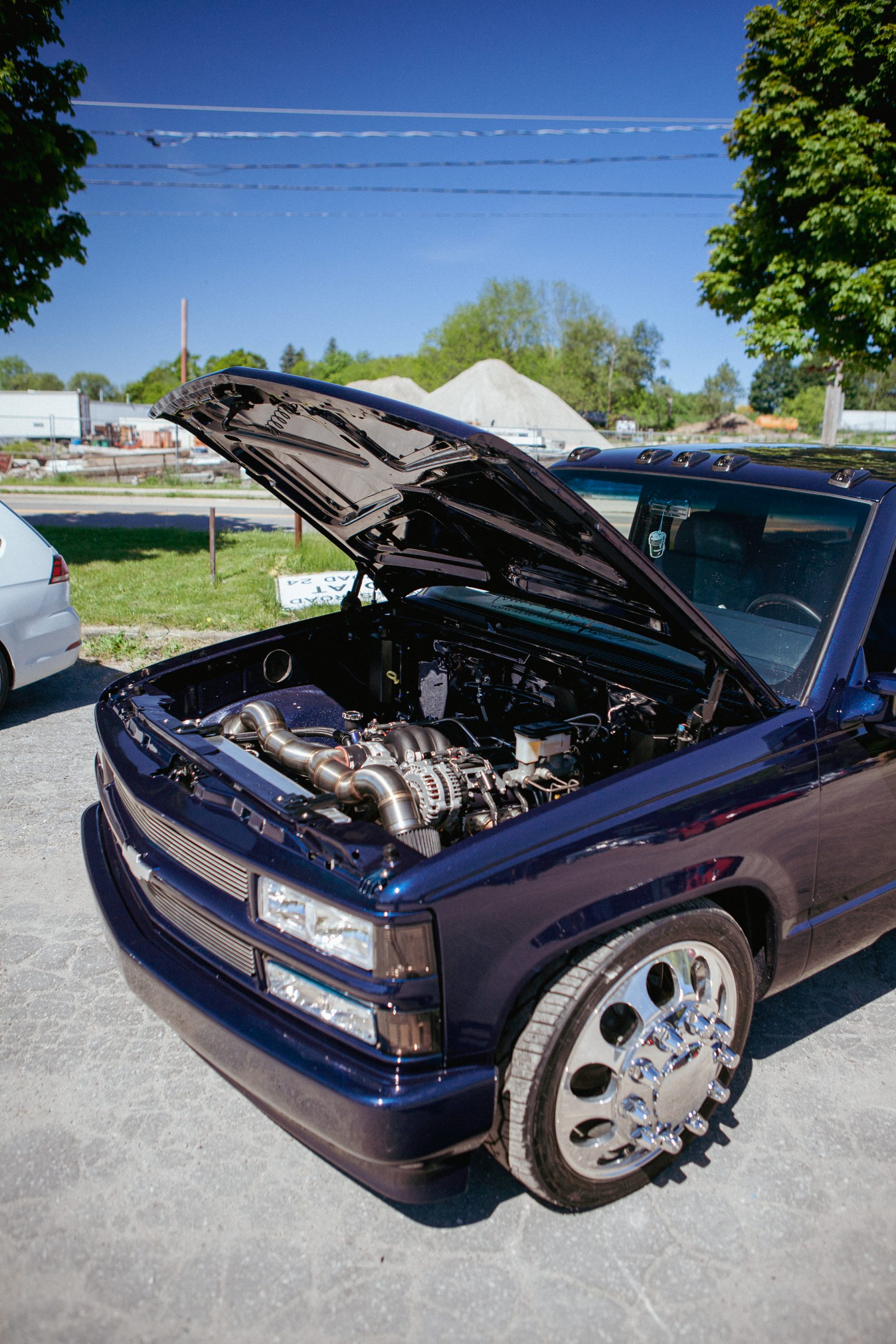
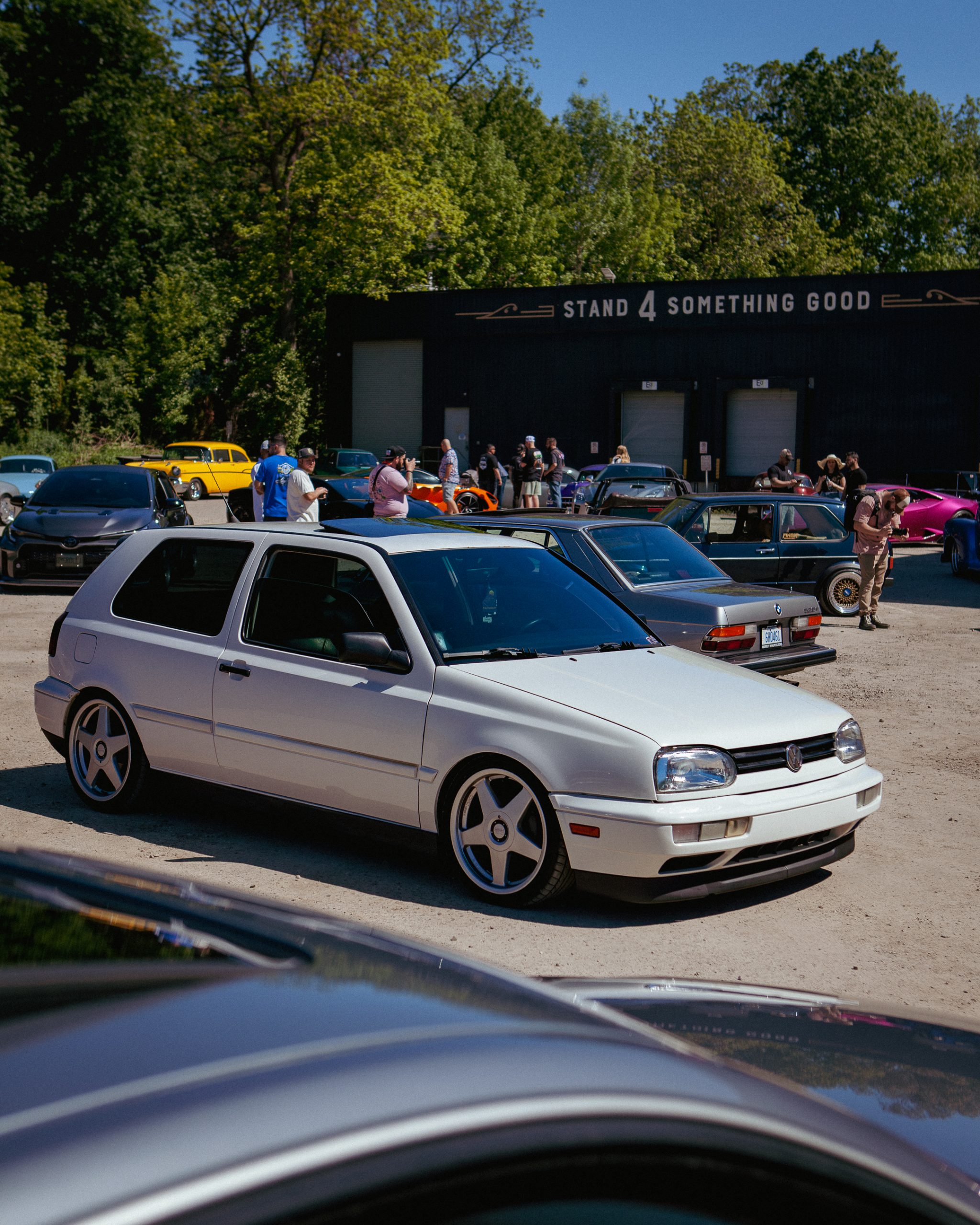
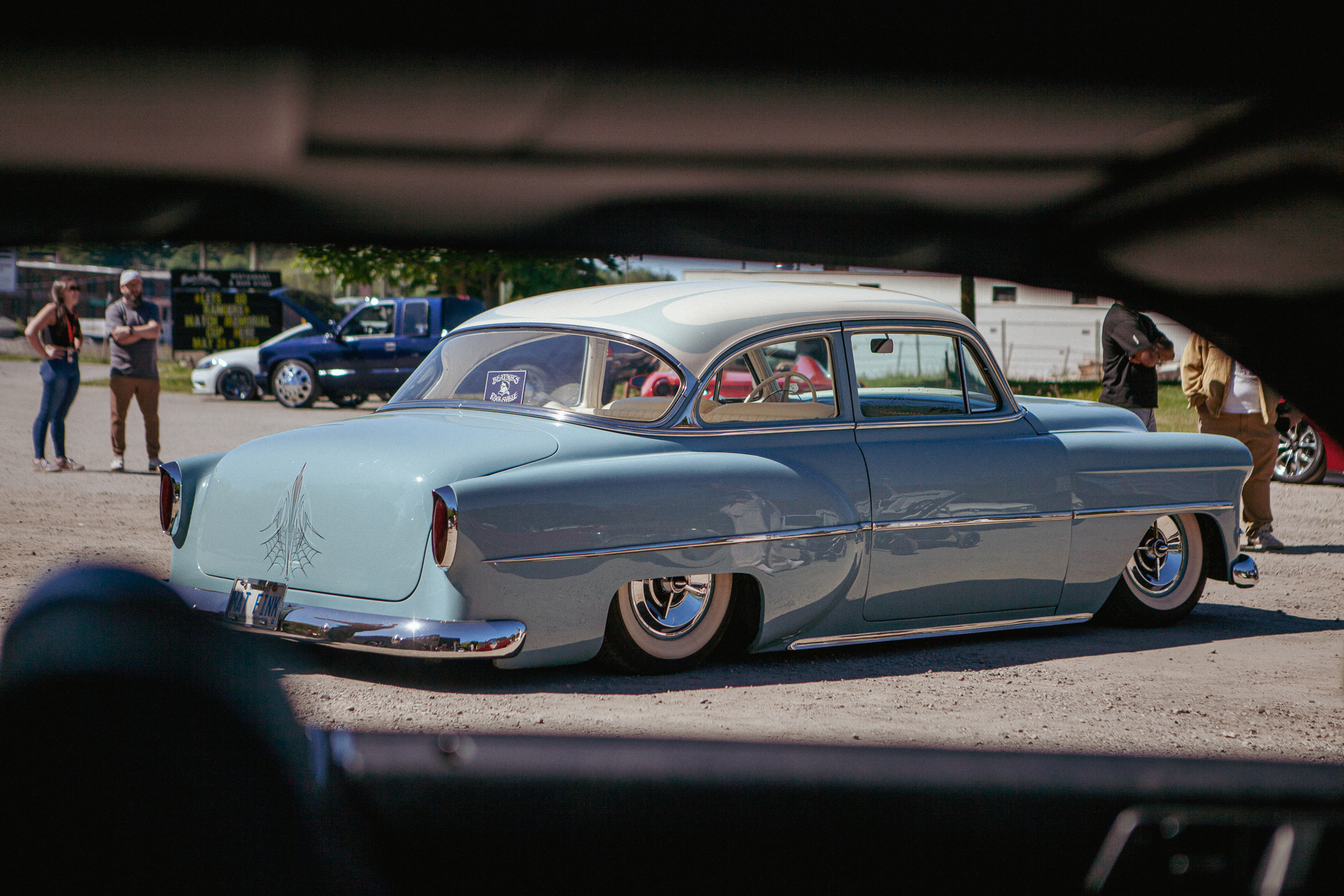
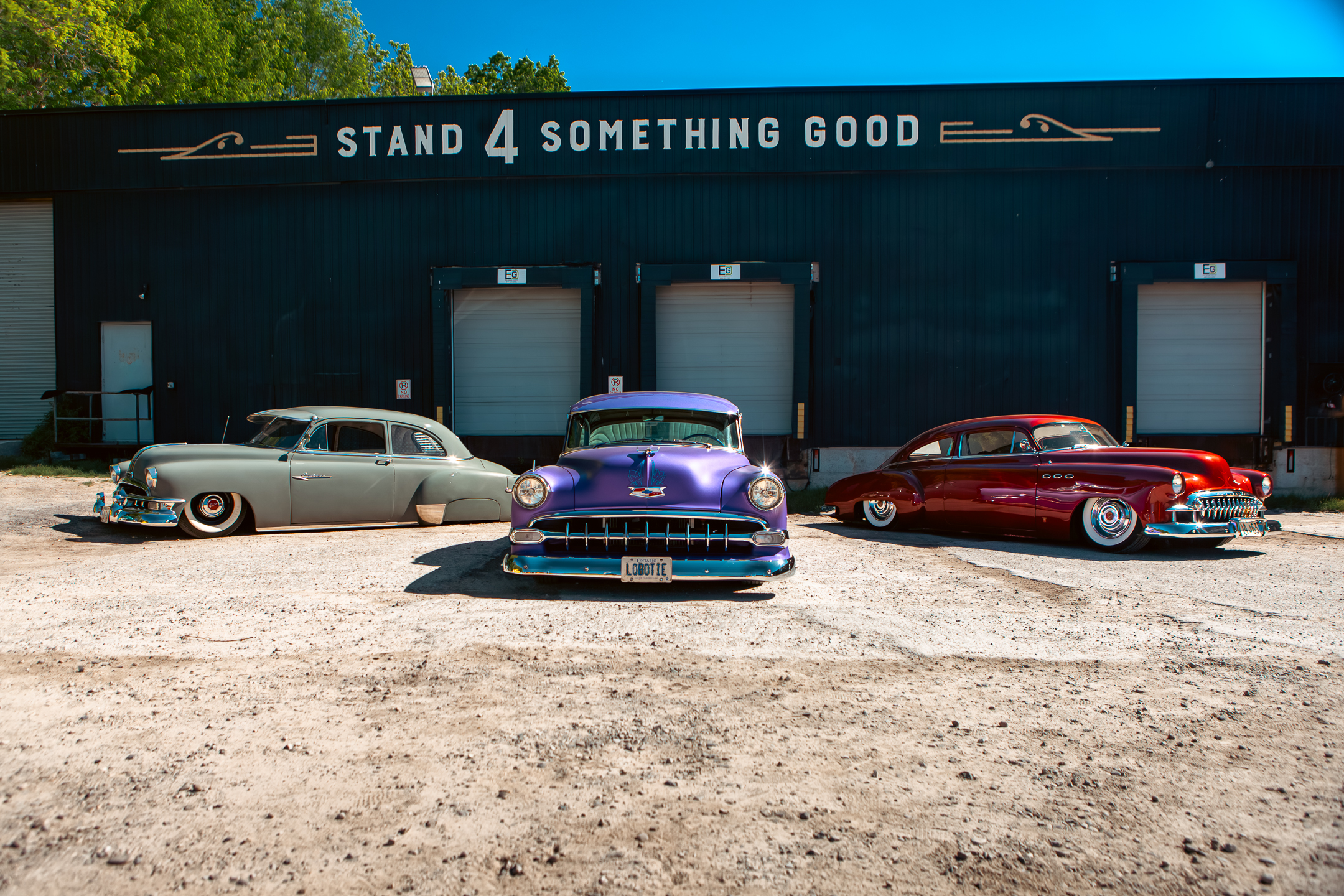
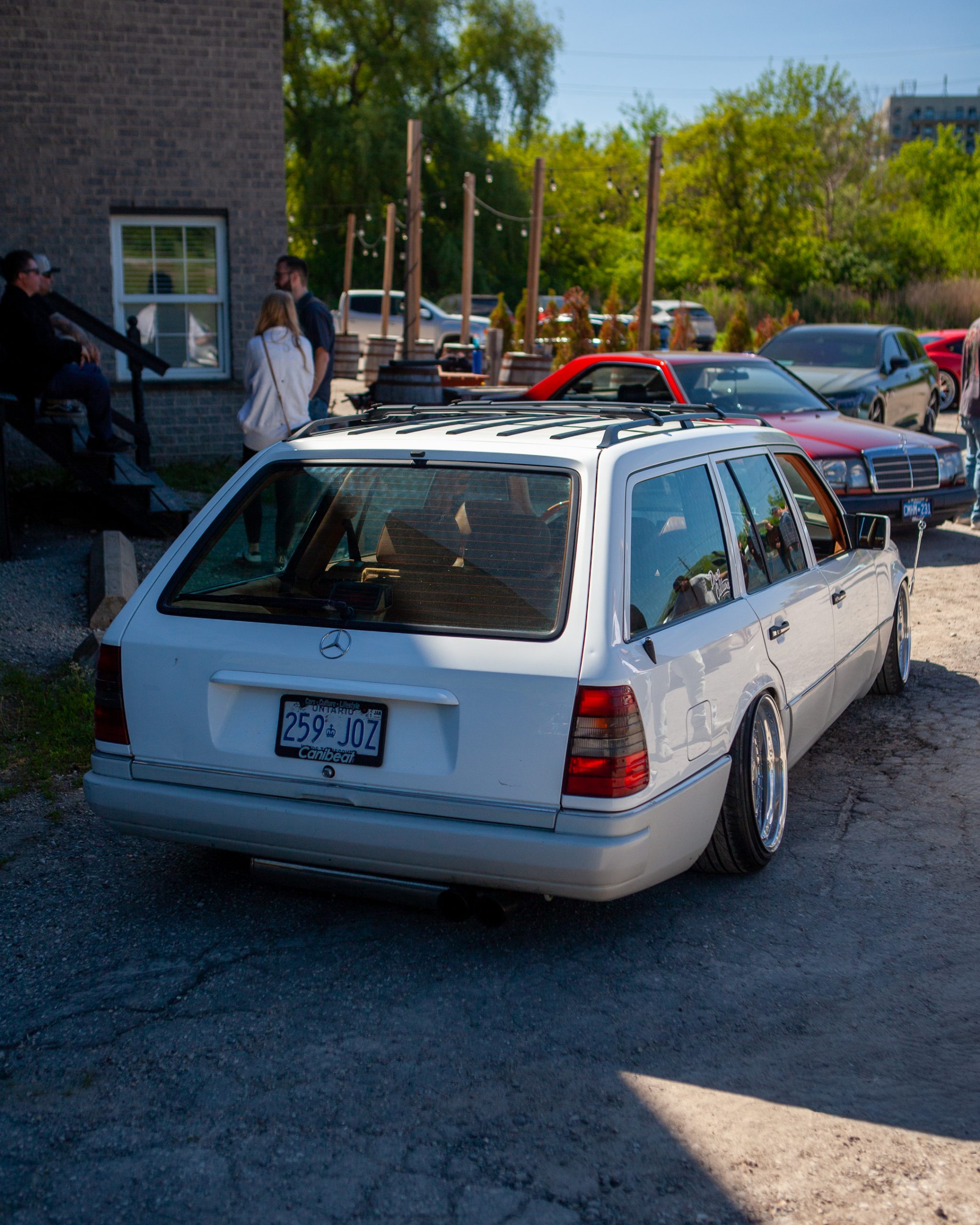
I have no problem admitting that I’ve become a bit more guarded with my time. A lot of my recent event coverage reflects that.
These days, my twenty-four-hour pie can be sliced very thin. So when I make the time to attend an event — especially one more than an hour from my front door — I want it to be worth the effort.
Though I do appreciate unique and well-built awards, they’re hardly the main draw. Event size isn’t much of a hook either, as it’s rare that I get the opportunity to see everything at a show with more than 100 vehicles.
Quality and variety, however, have always been paramount to me. Now, I’m no snob, and I’m certainly not expecting supercars around every corner.
I just hope to see a few interesting vehicles, alongside one or two that are a little less common. A few unique takes on classics, a handful of projects, and I’m in heaven.
Not too much to ask, right? At the end of the day, I just want the cars to be interesting enough to start a conversation.
Thankfully, many of the people I attended shows with years ago share the same outlook. In recent years, they’ve started organizing events of their own that tick all the same boxes.
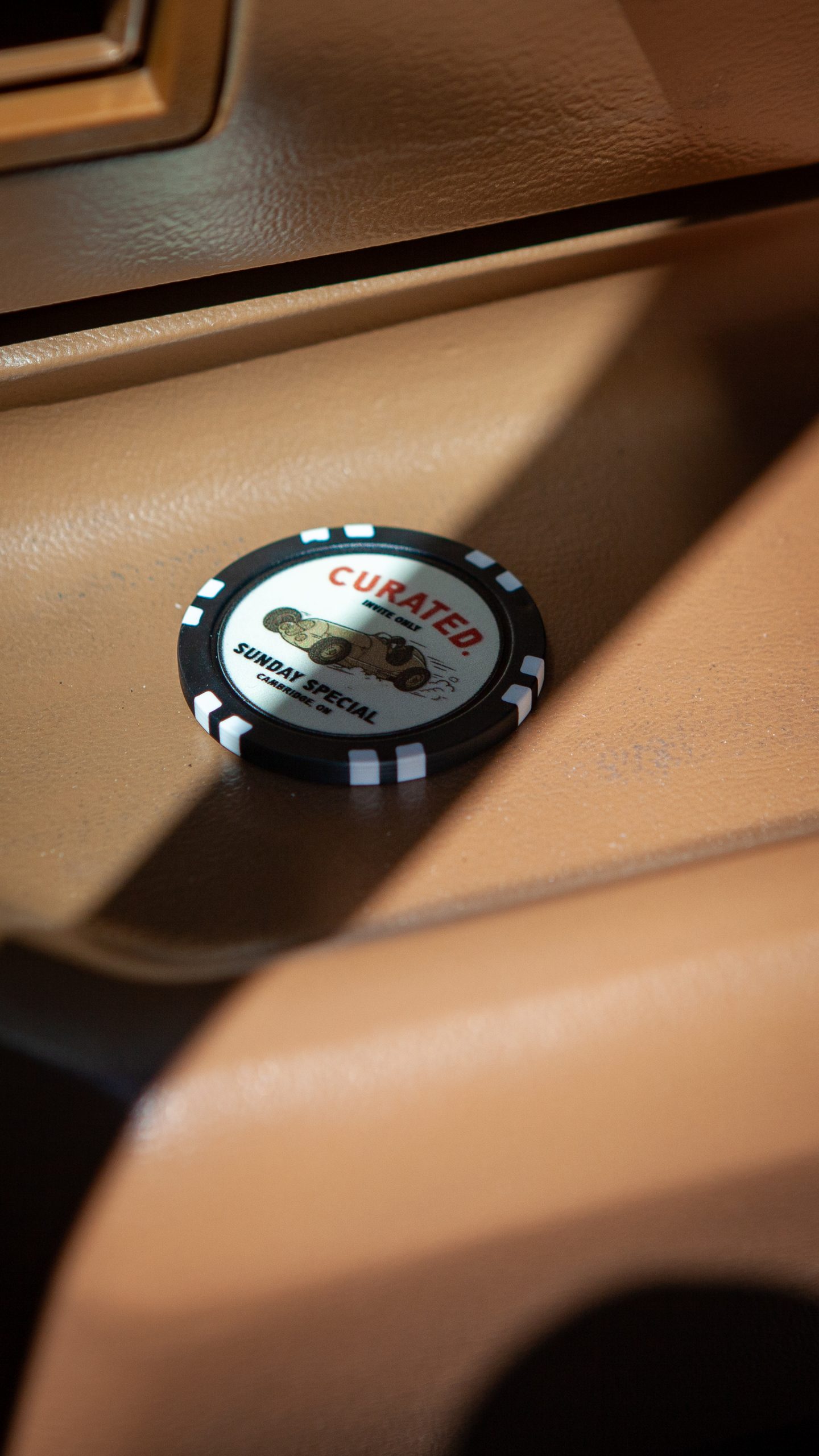
Curated is the brainchild of two friends of mine: Jessica Paige and Arthur (Art) Malczewski, both highly respected members of the automotive community in their own right.
When Jessica told me they were teaming up to put on an event, I put it on my calendar — not entirely sure what to expect.
In fact, Jessica even asked me to put together a short list of cars I considered among the best in Ontario.
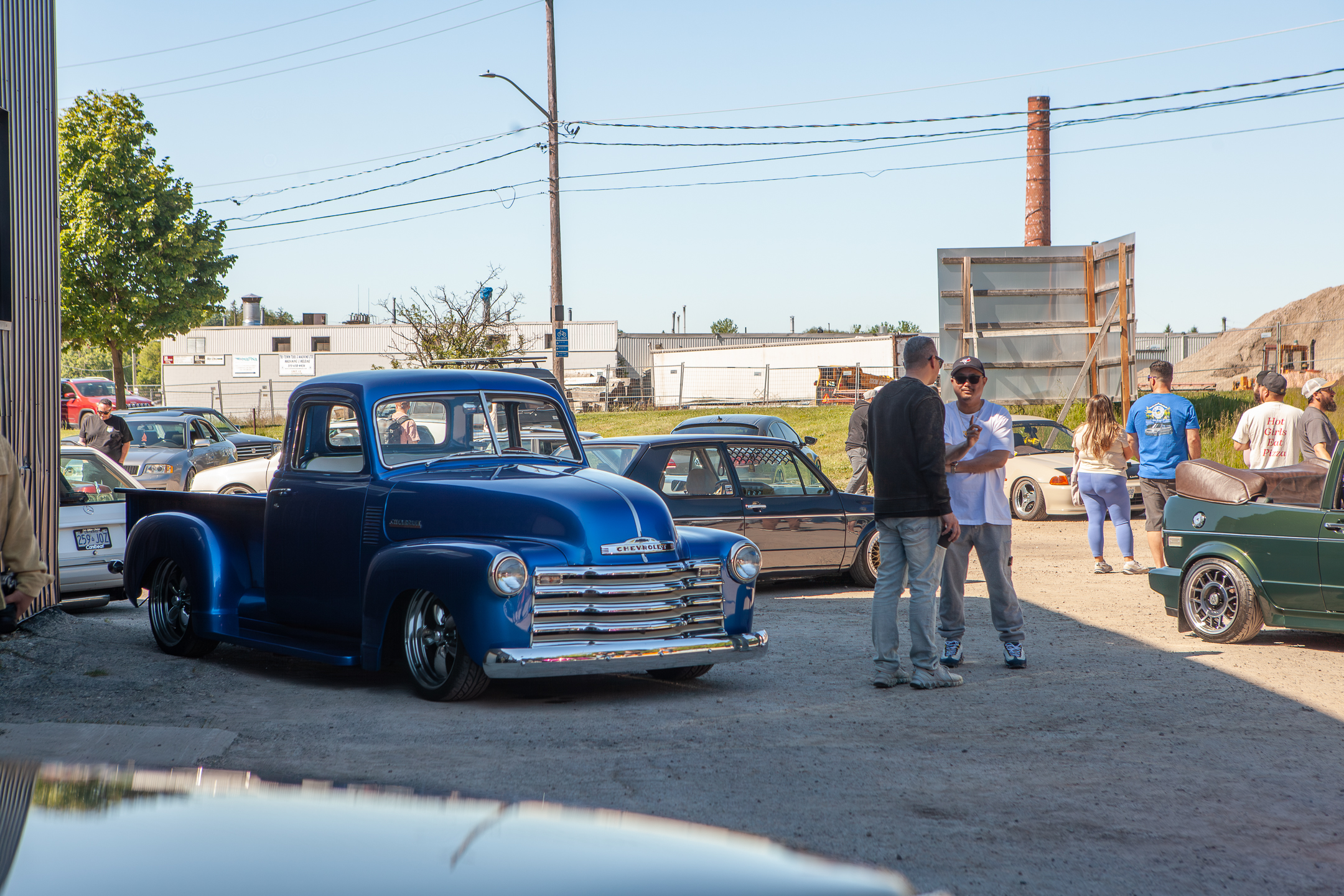
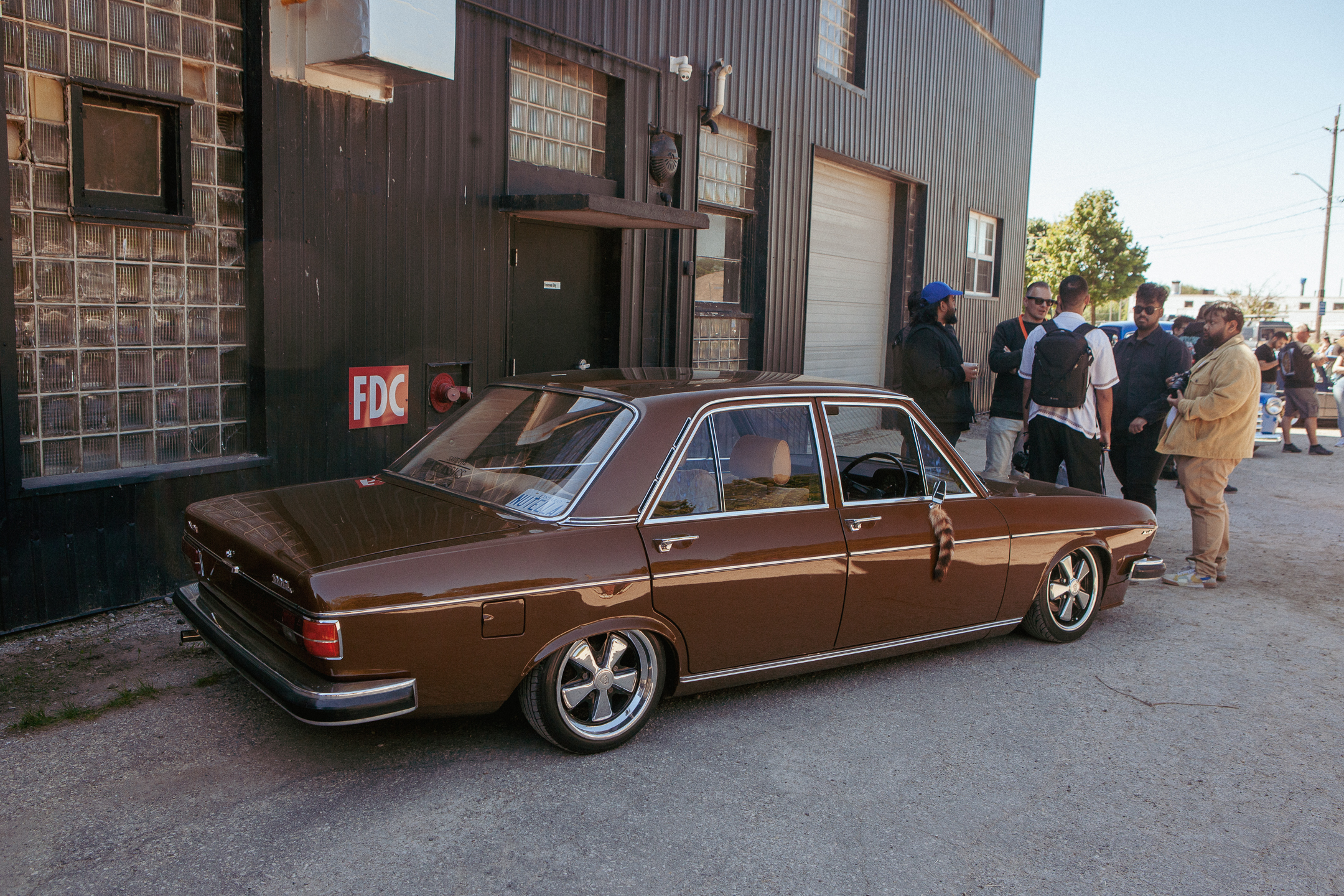
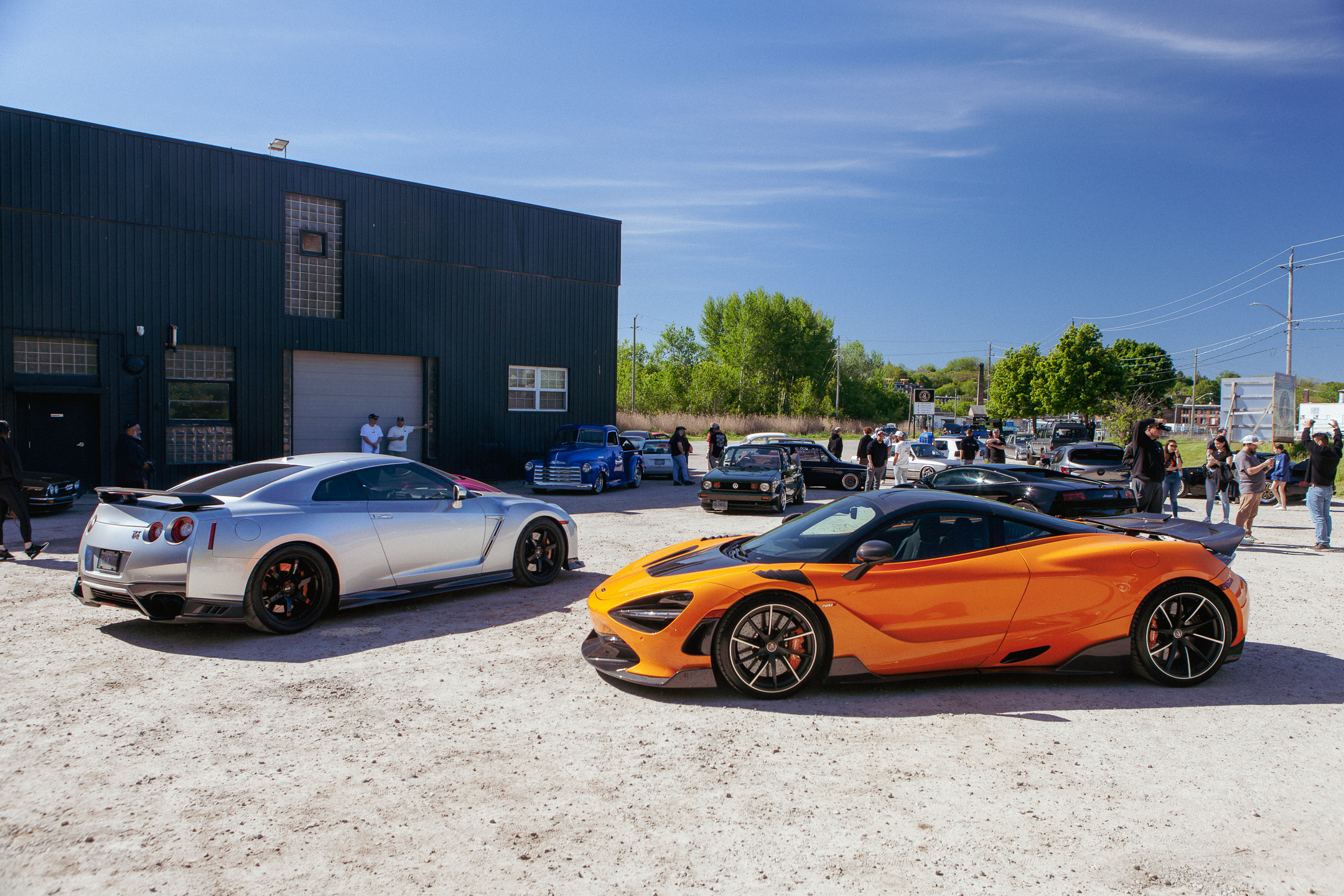
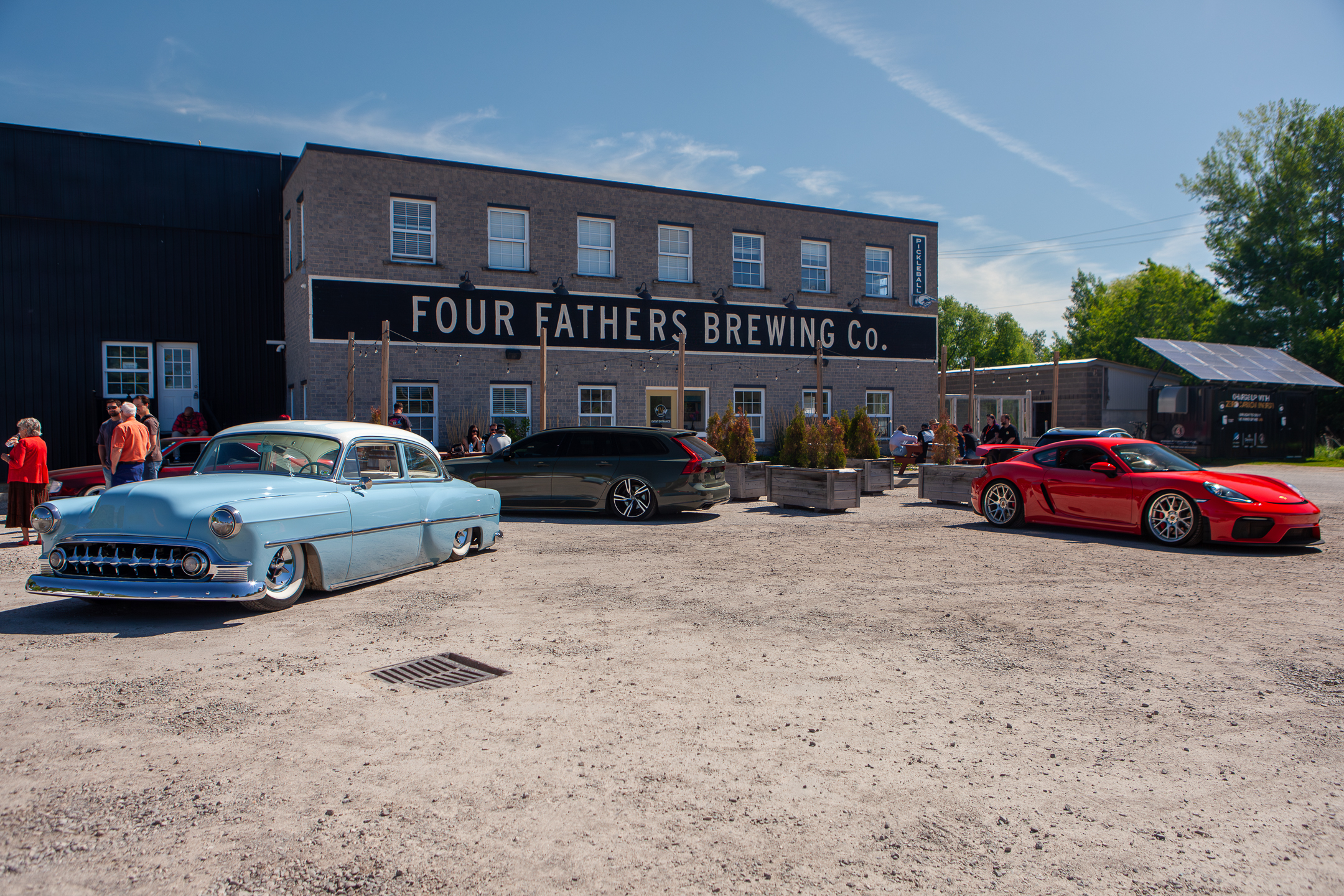
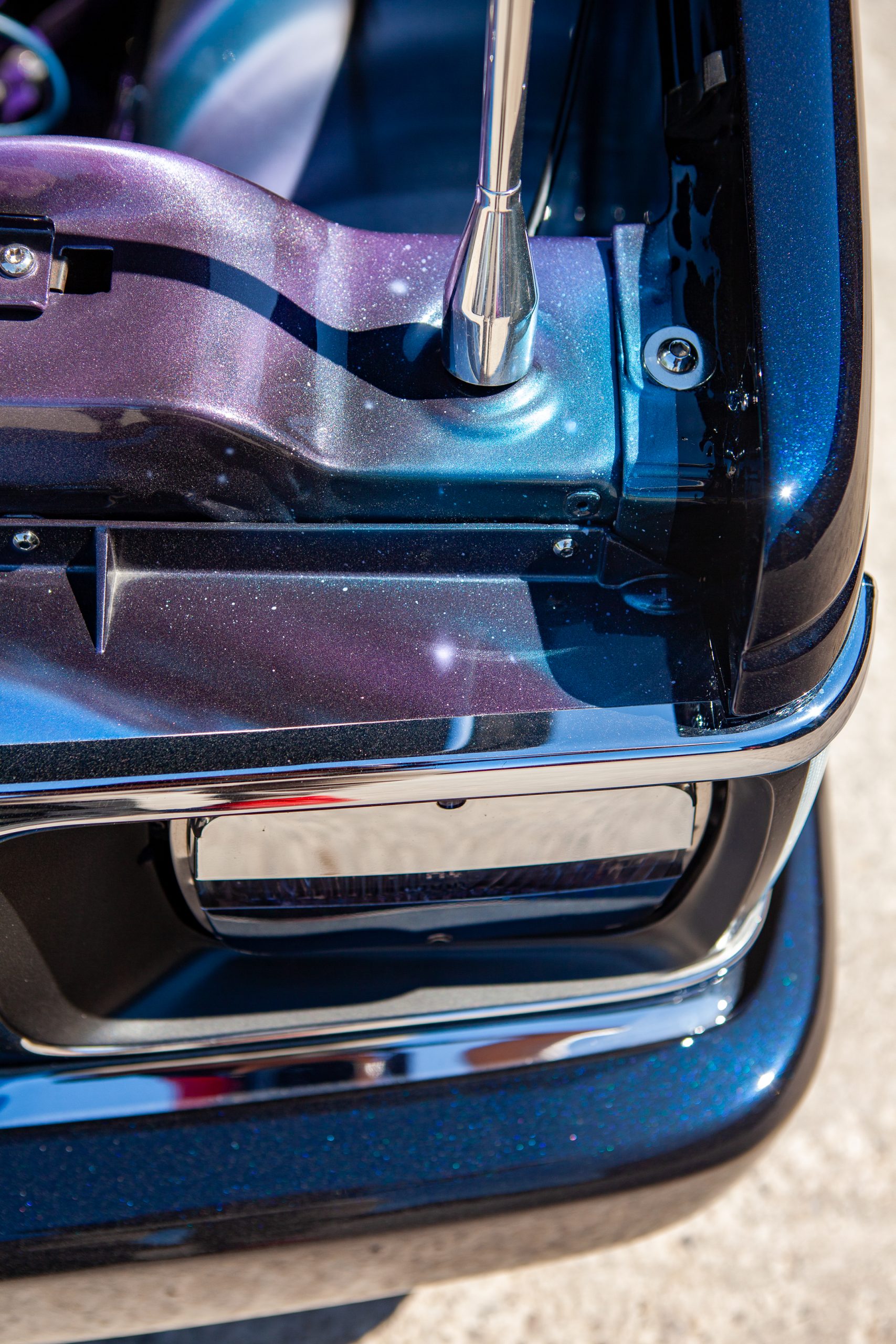
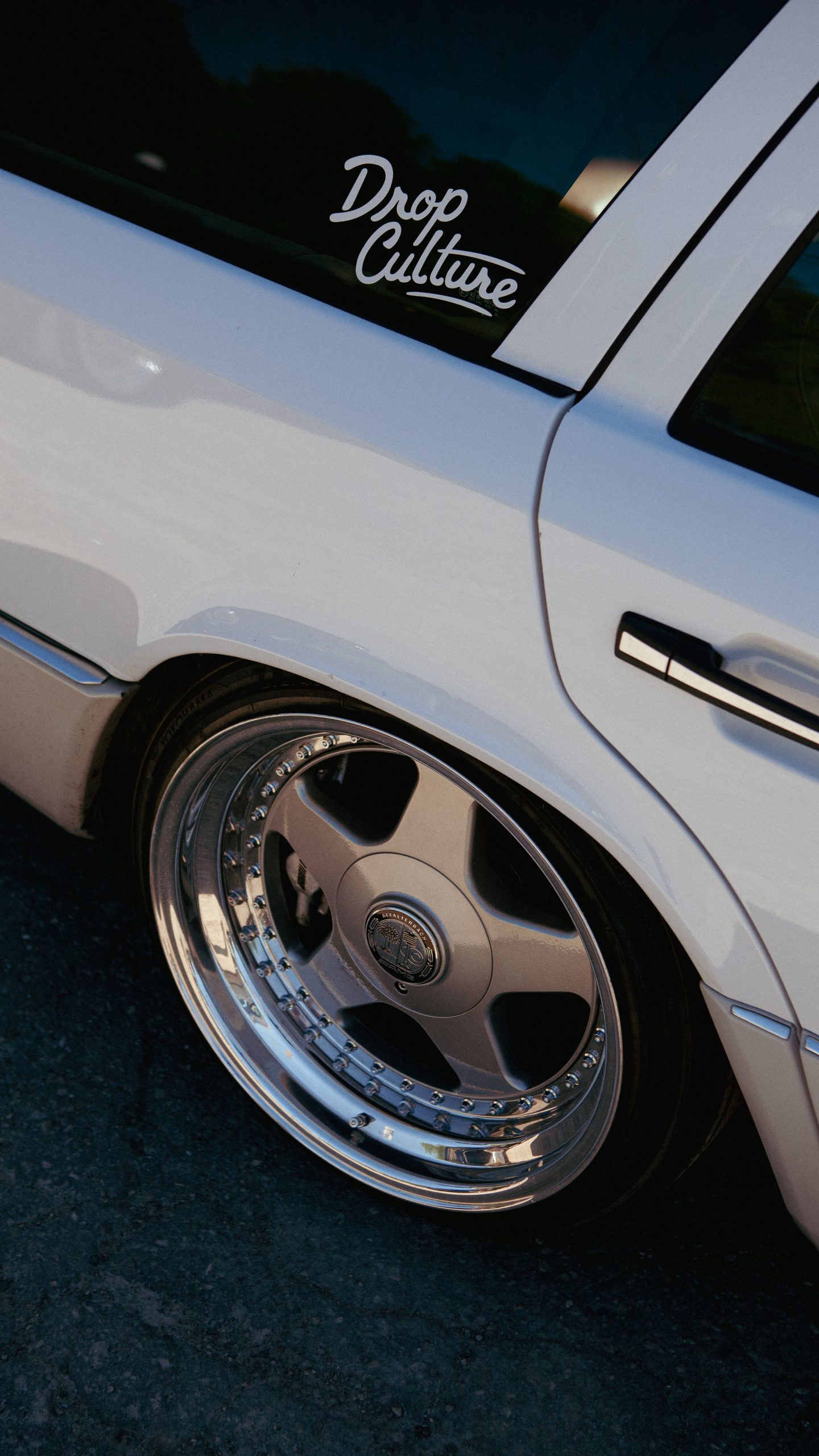
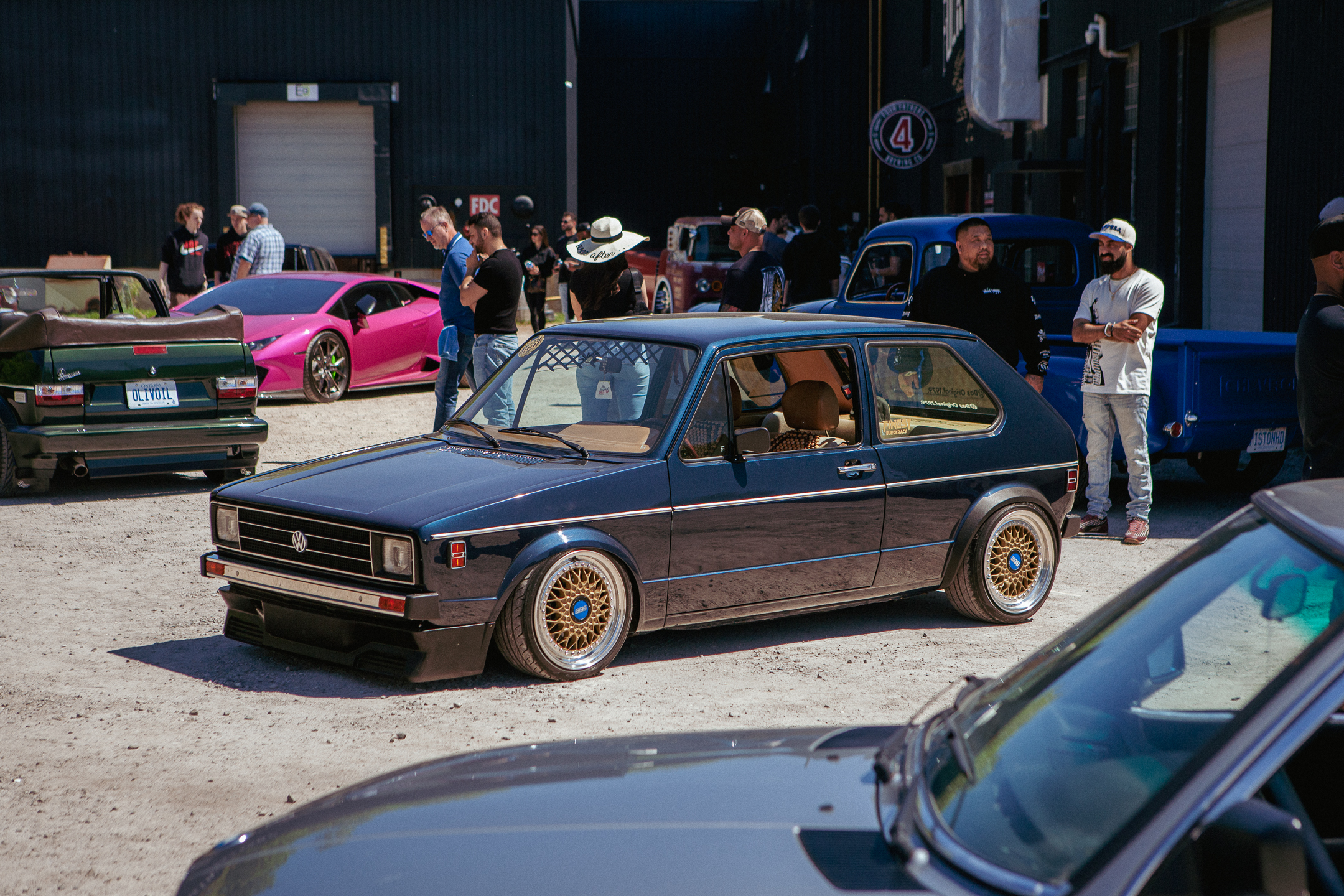
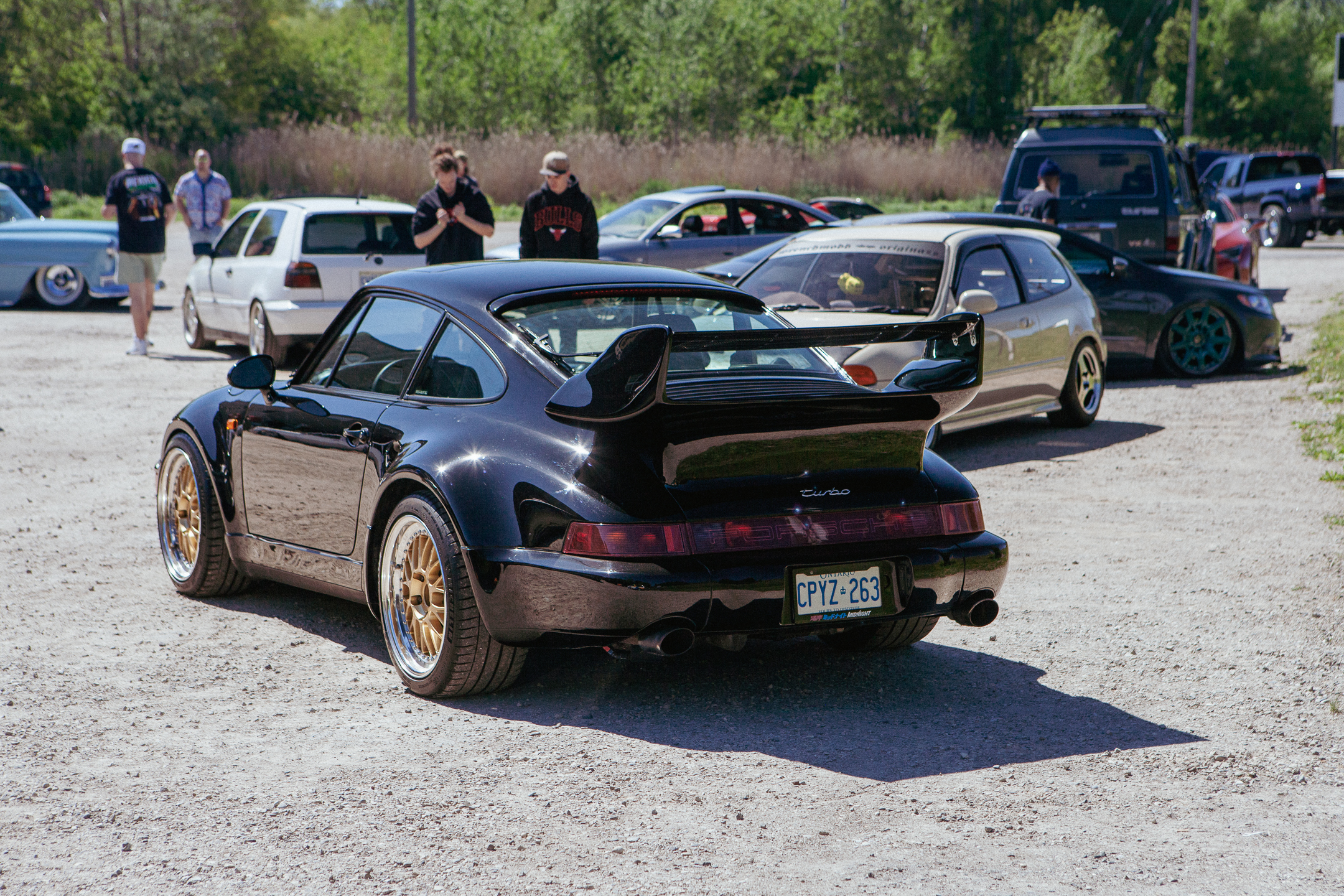
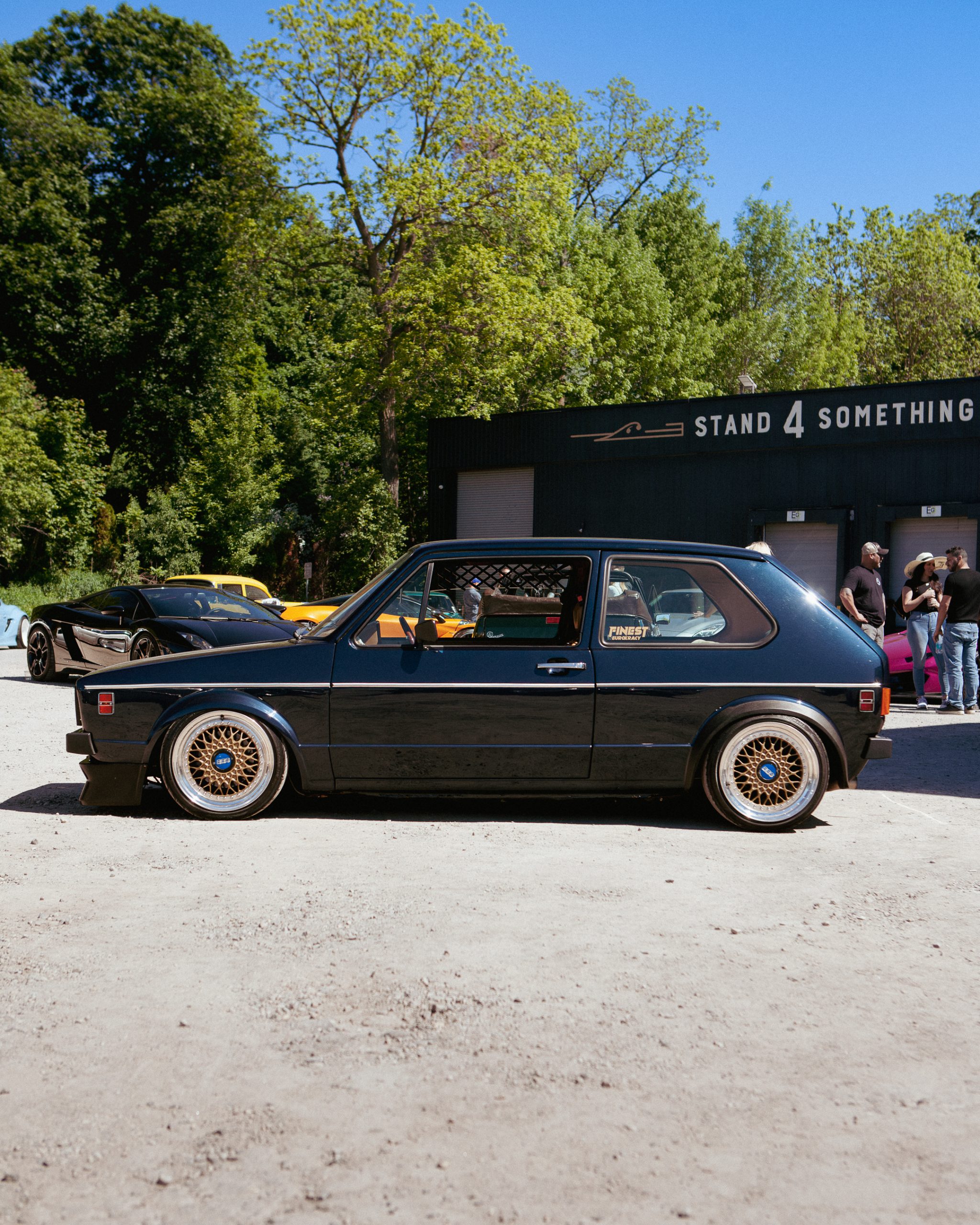
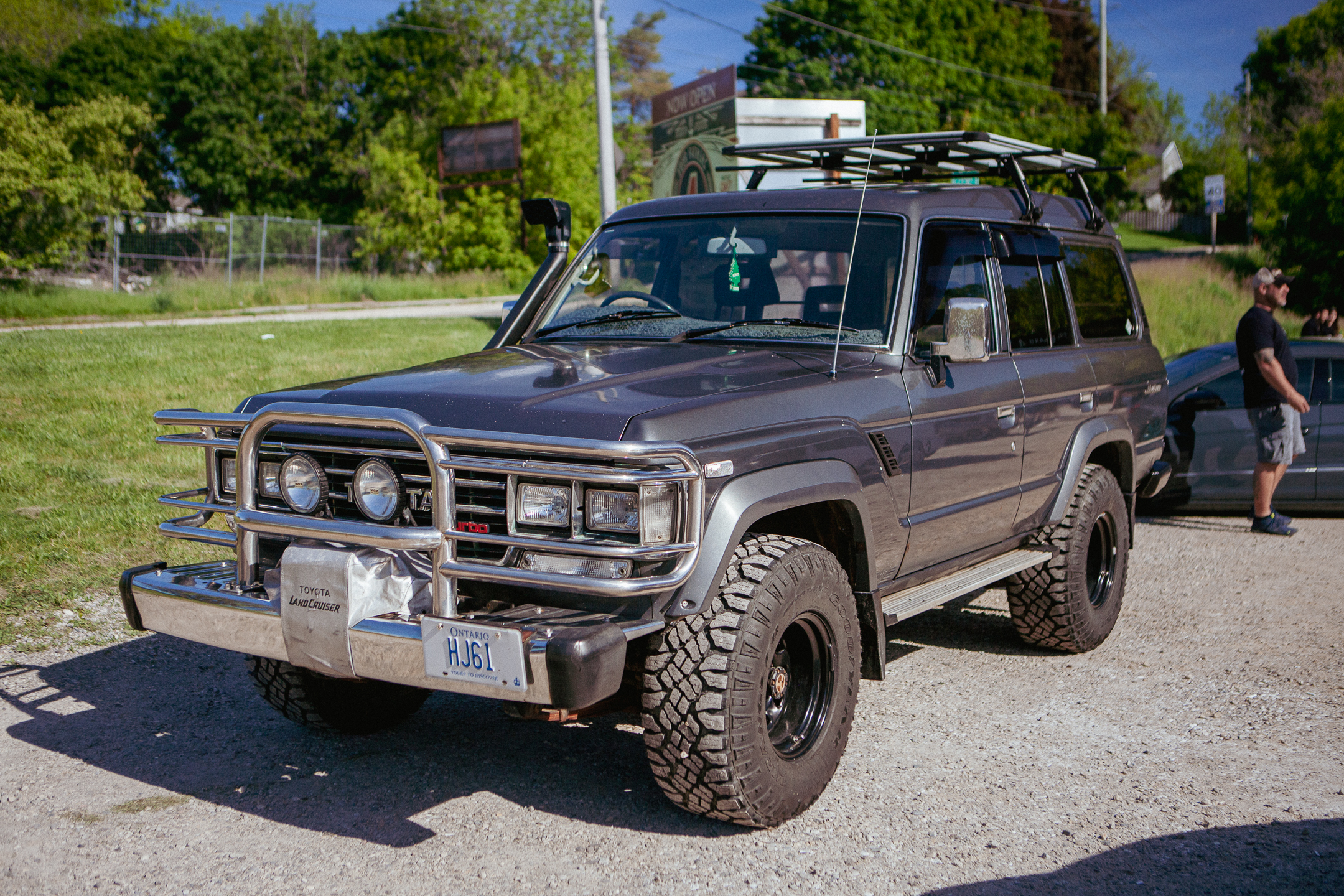
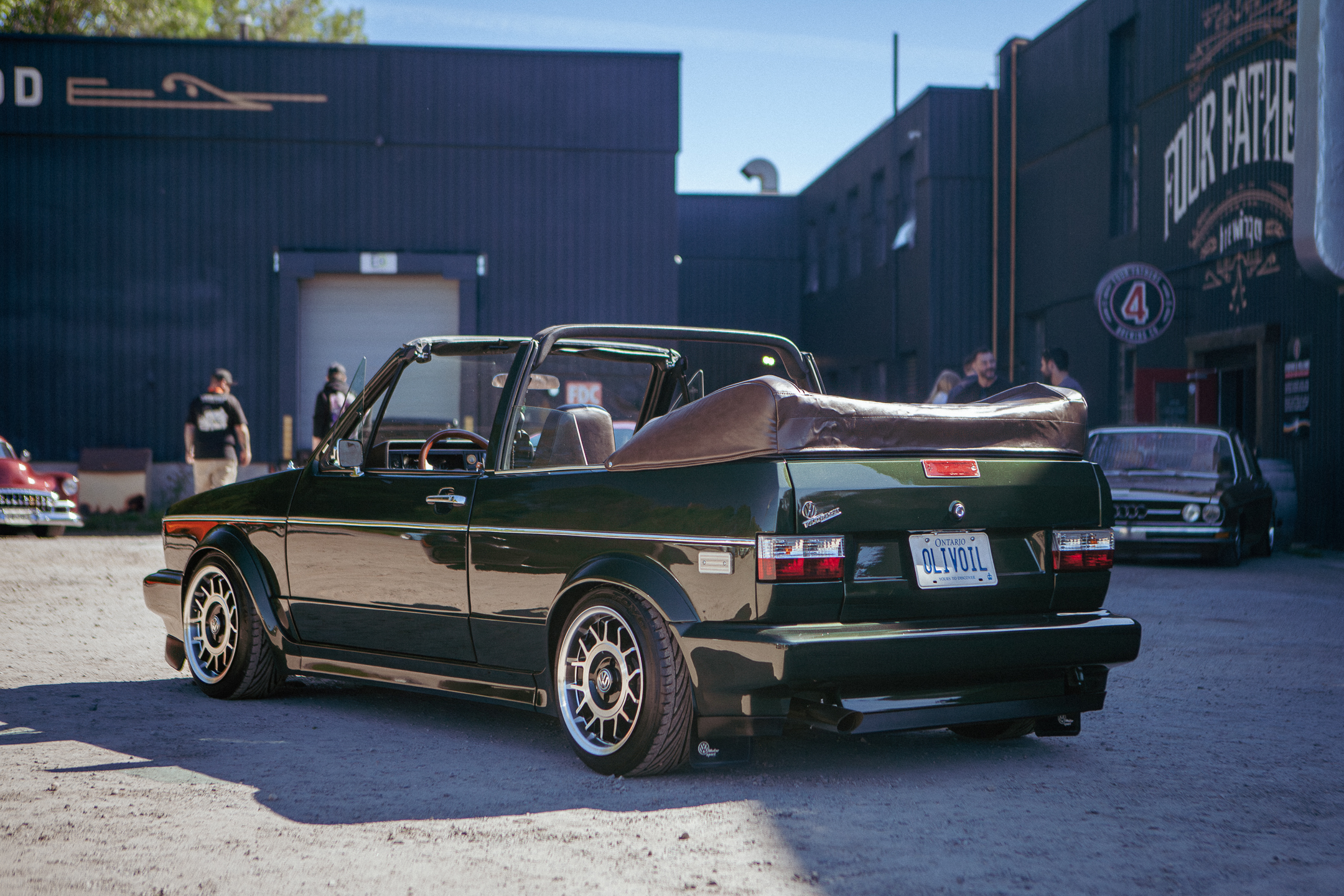
The result of their months of planning and mostly behind-the-scenes preparation was an event built around a carefully selected group of vehicles gathered at Four Fathers Brewing in Cambridge, Ontario.
Held early in the morning, the event borrowed from the now-popular Cars & Coffee formula. Unlike most of those gatherings, however, vehicle attendance wasn’t open to just anyone.
Invites were sent out prior to the event, and RSVPs were required to ensure everyone felt their time was being respected.
Absentmindedly packing rows of cars into the venue wasn’t the goal, and I don’t think I can stress enough how motivating that is as a photographer.
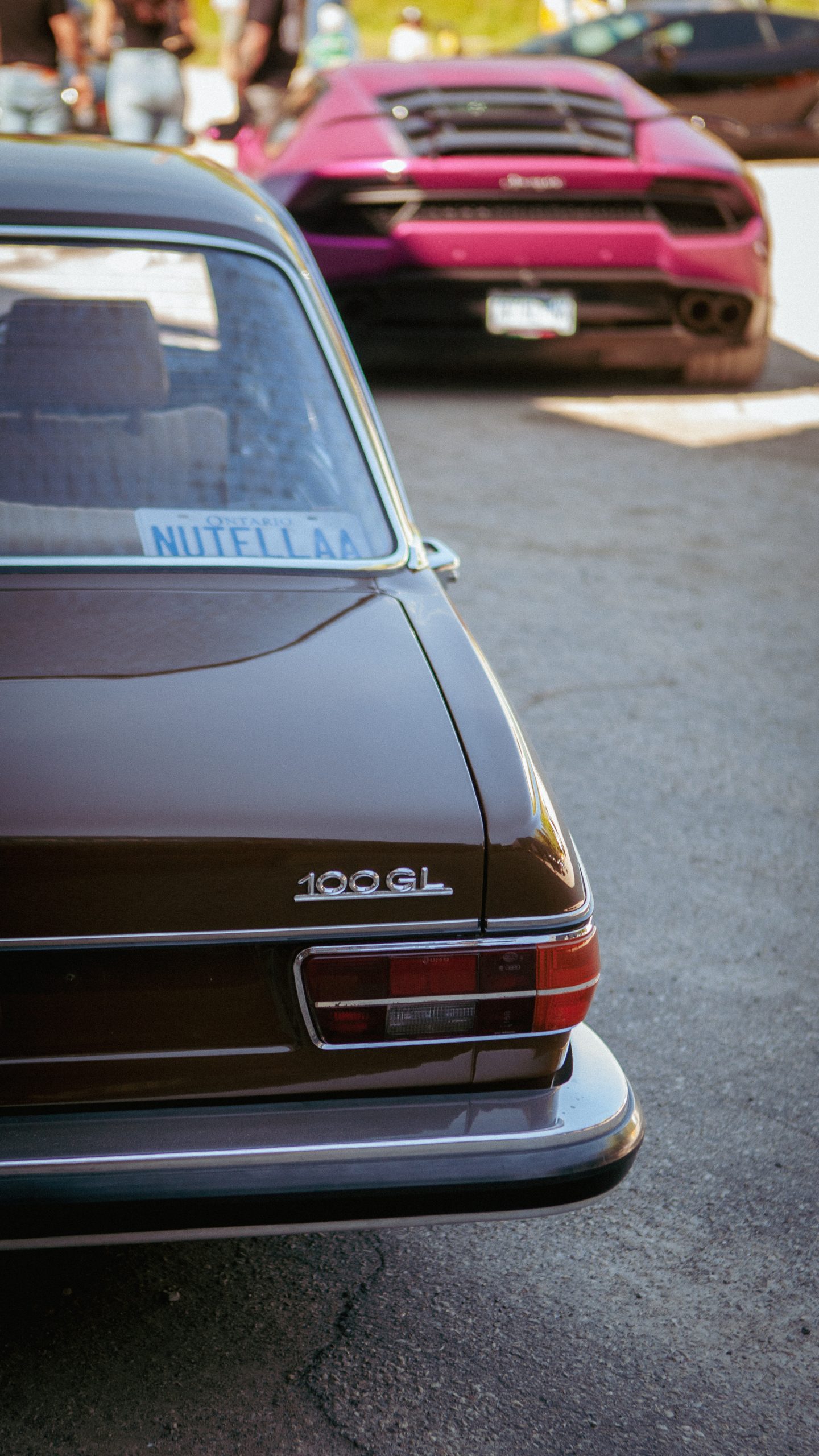
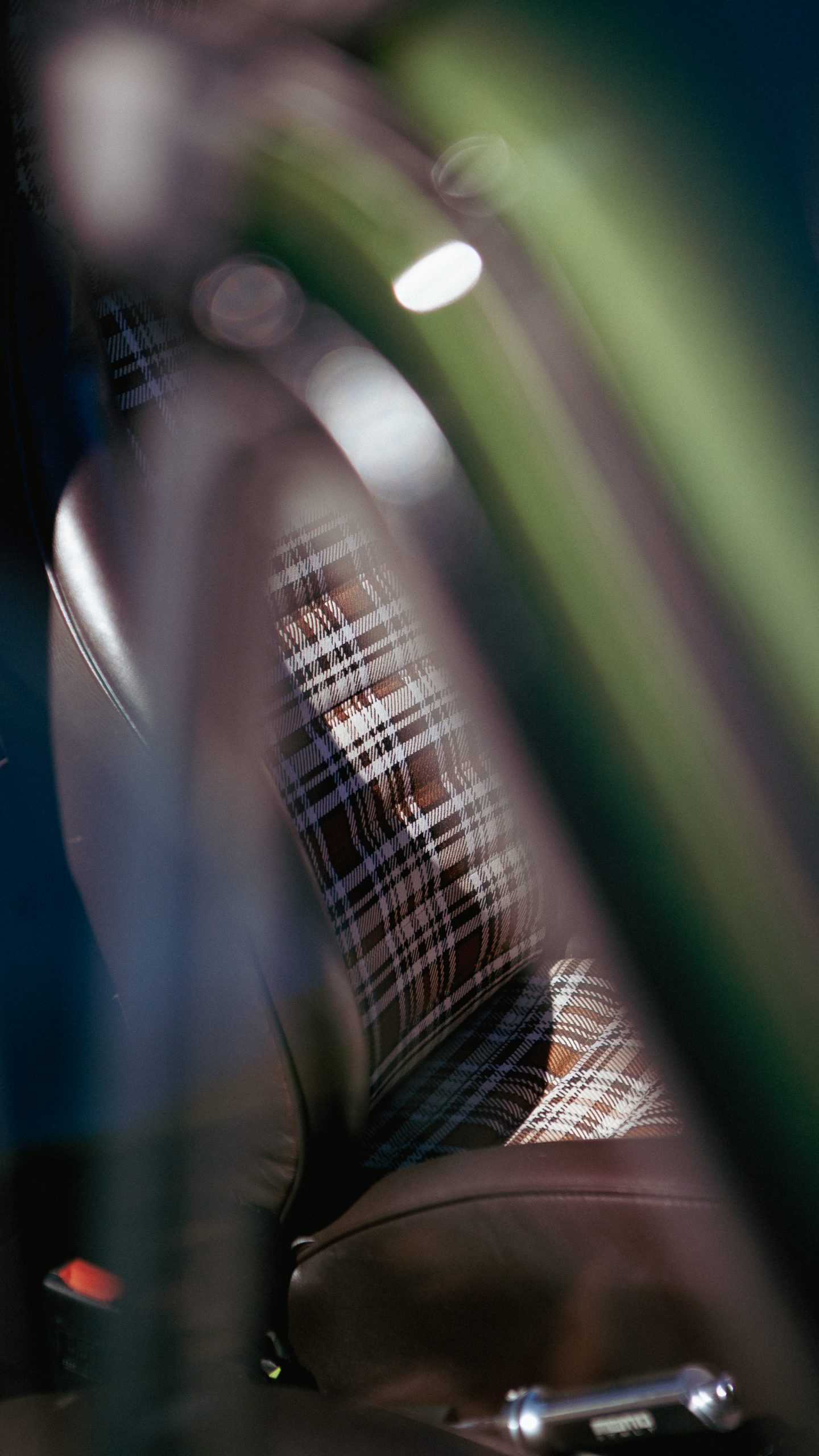
I enjoy the opportunity to play with composition, light, and angles. Rows upon rows of cars simply don’t allow for that. Thankfully, Jessica and Art also made sure to include vehicles from all corners of the hobby.
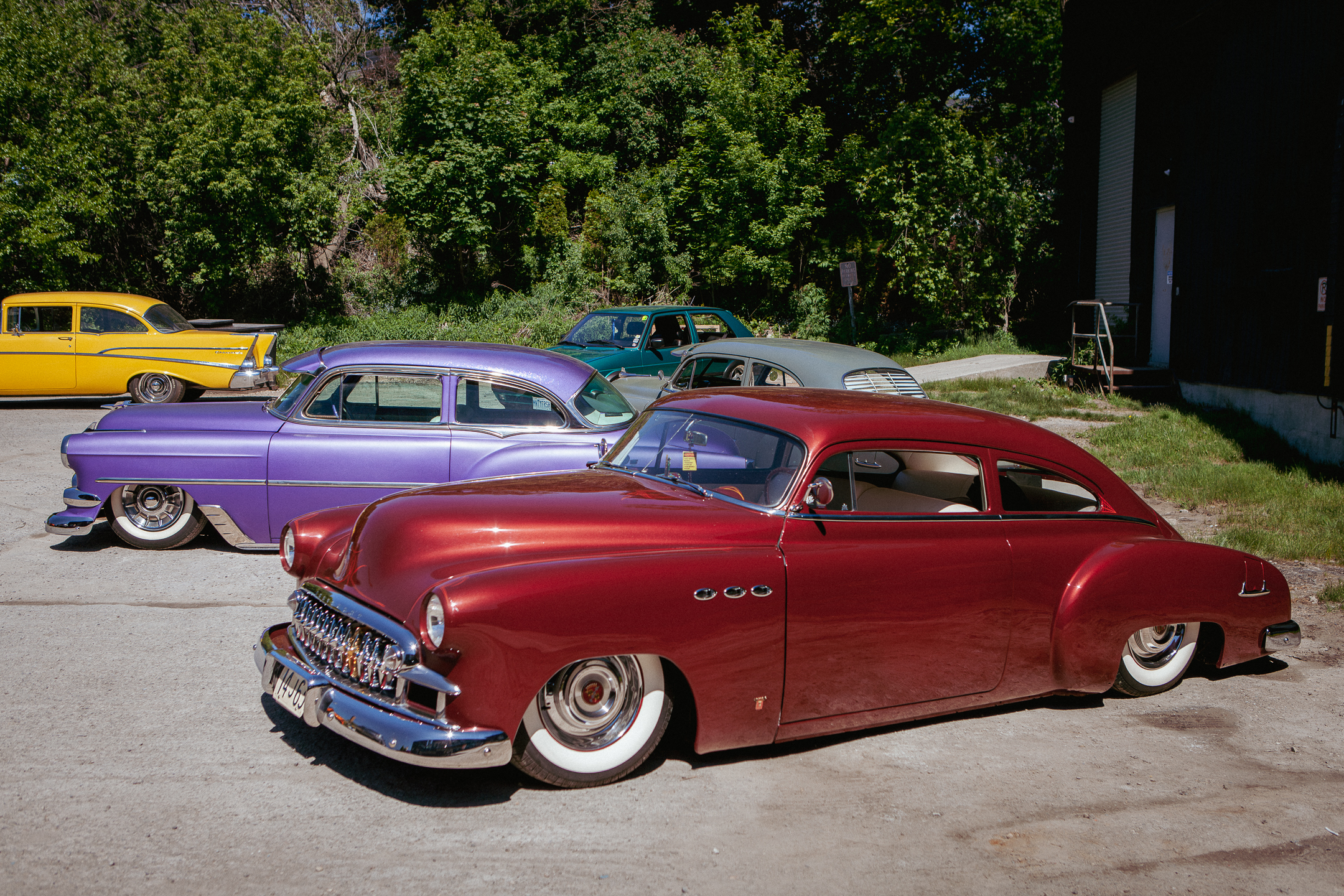
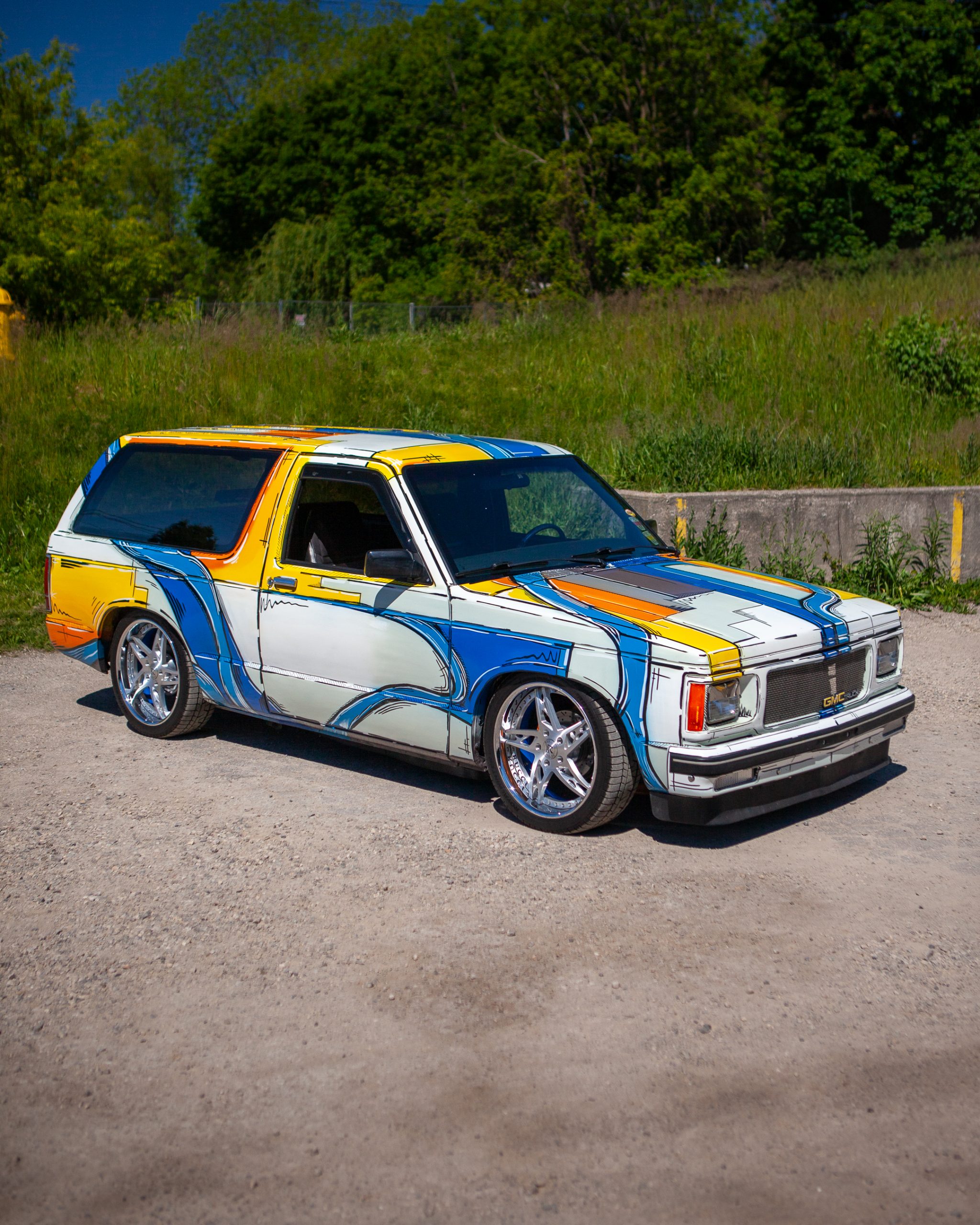
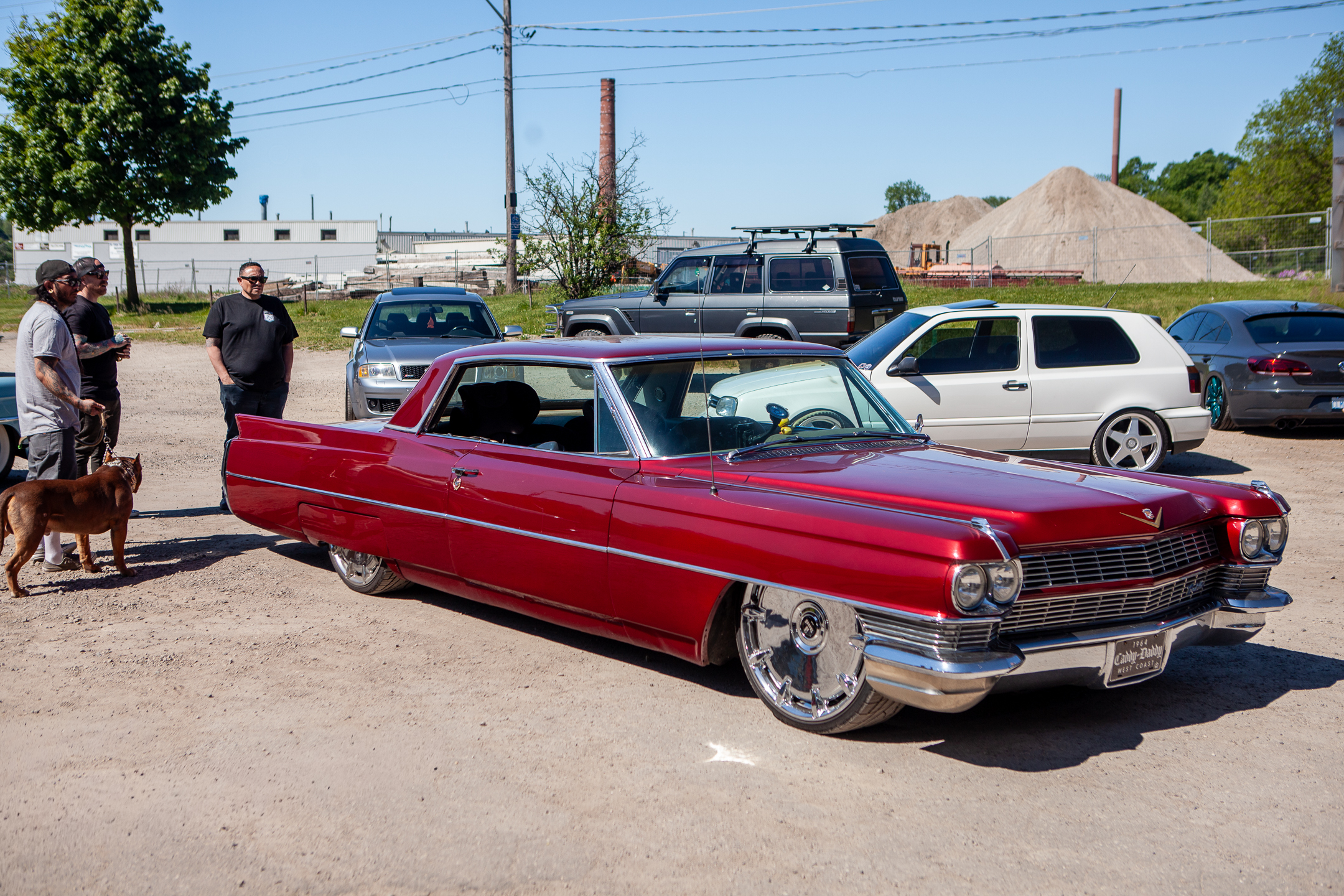
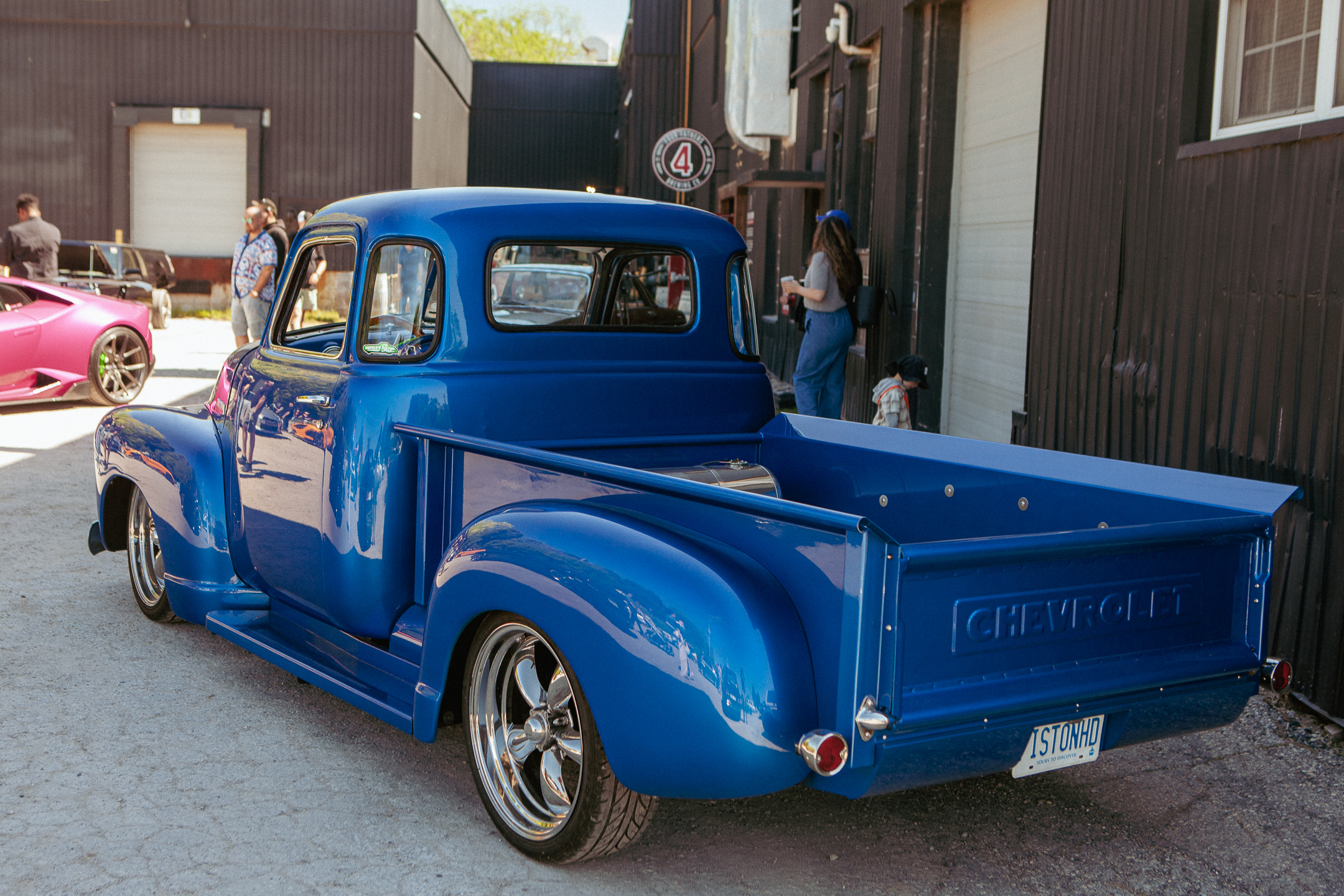
At one end of the parking lot, you could find a trio of kustoms worthy of a Sleds North Gathering.
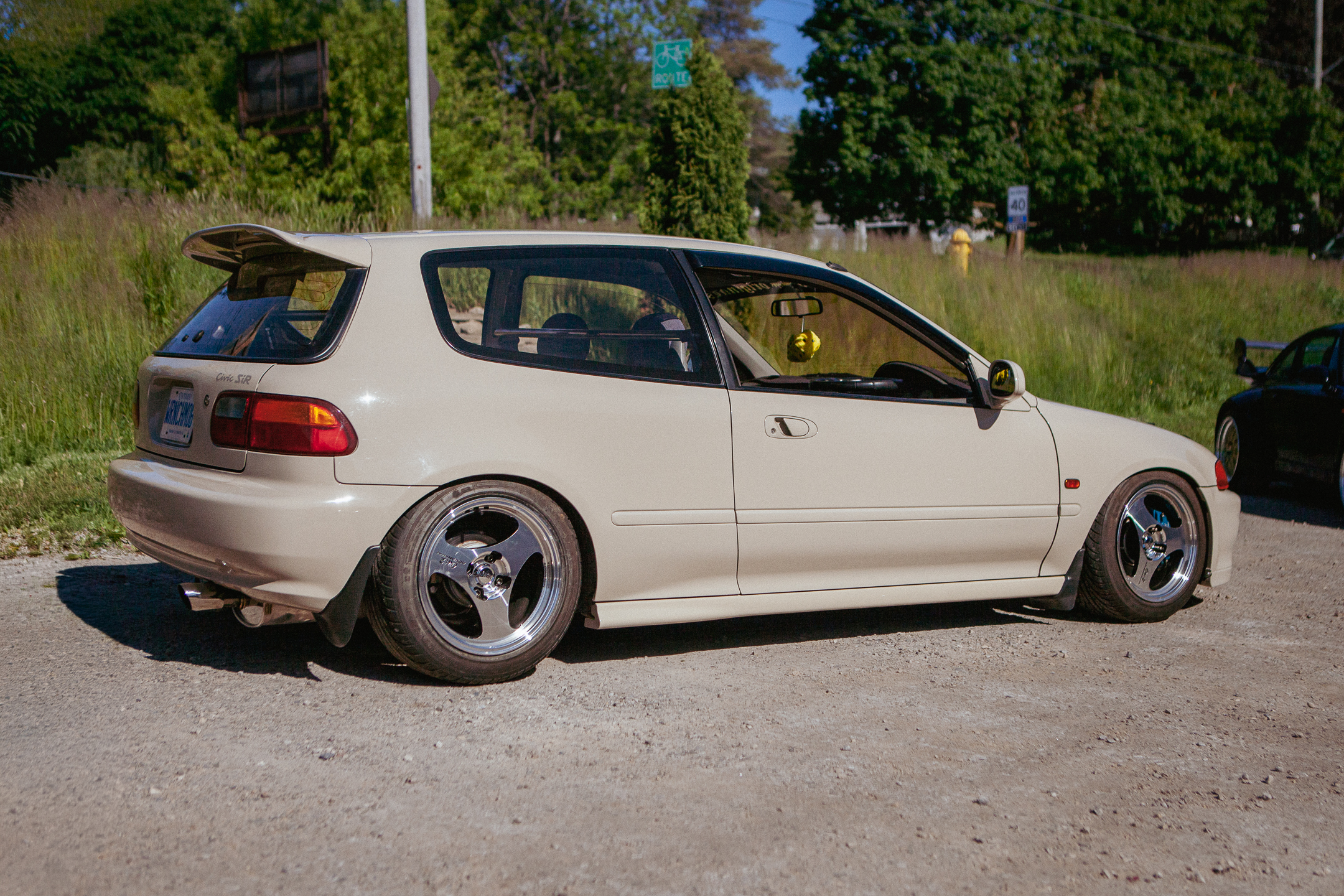
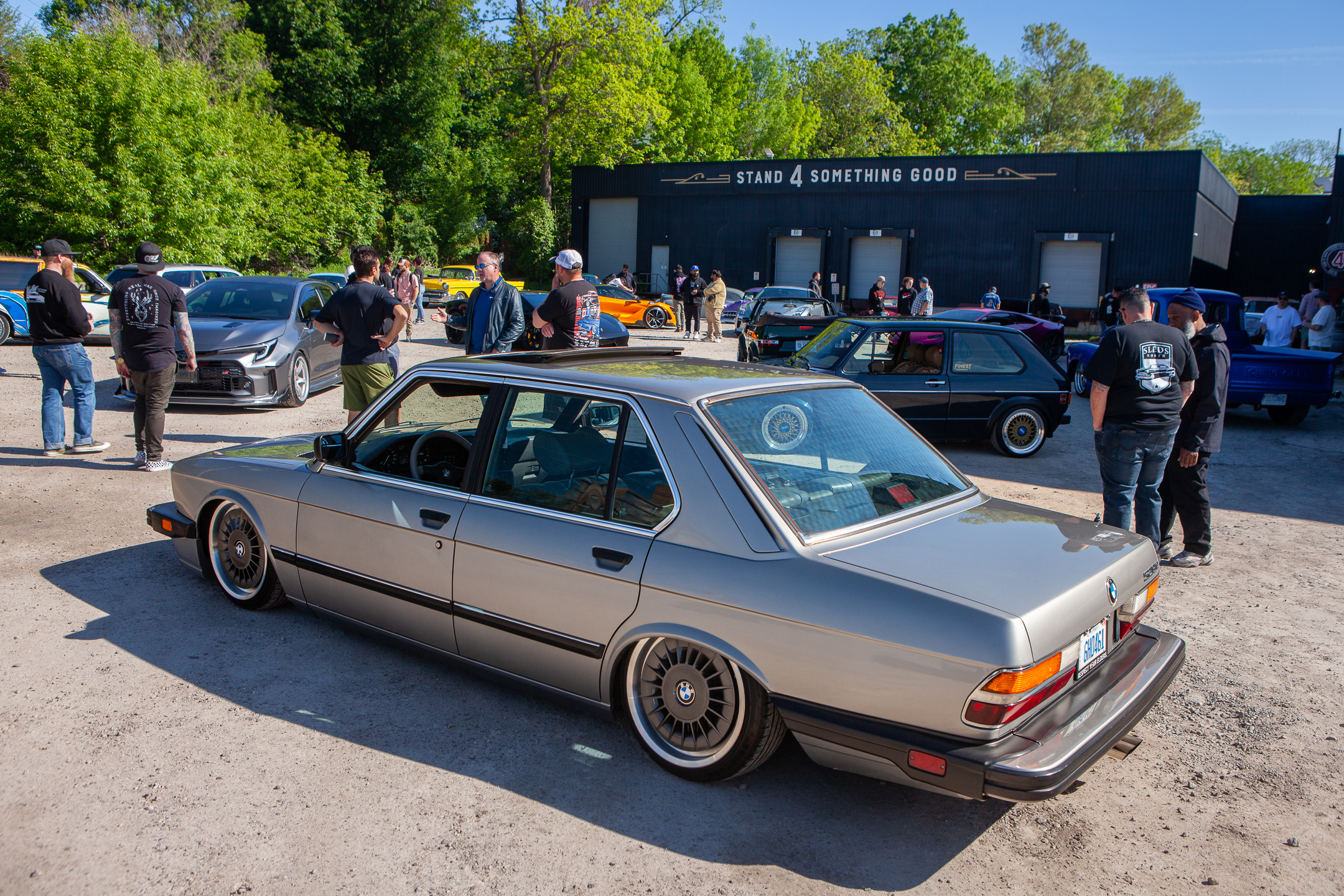
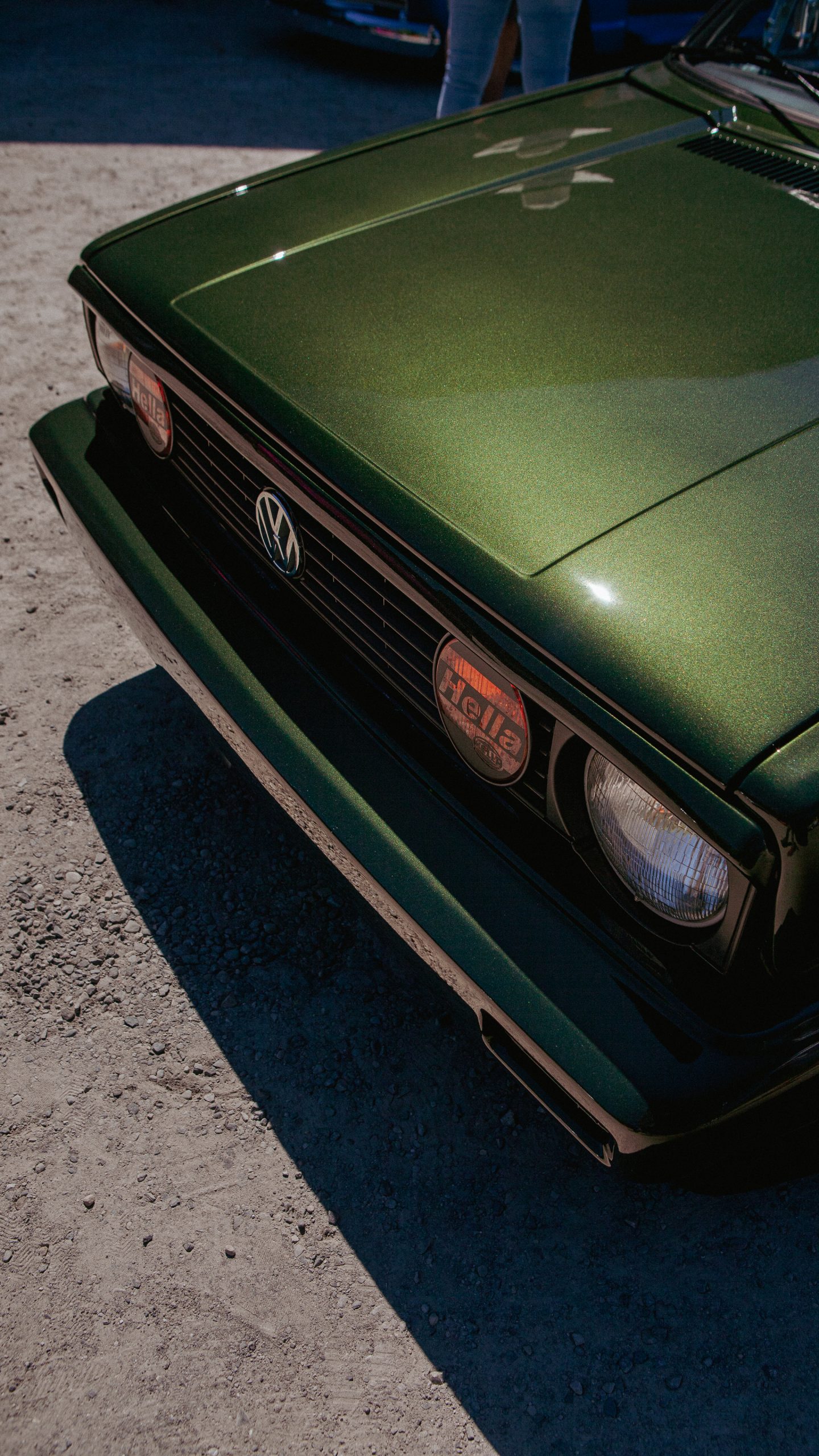
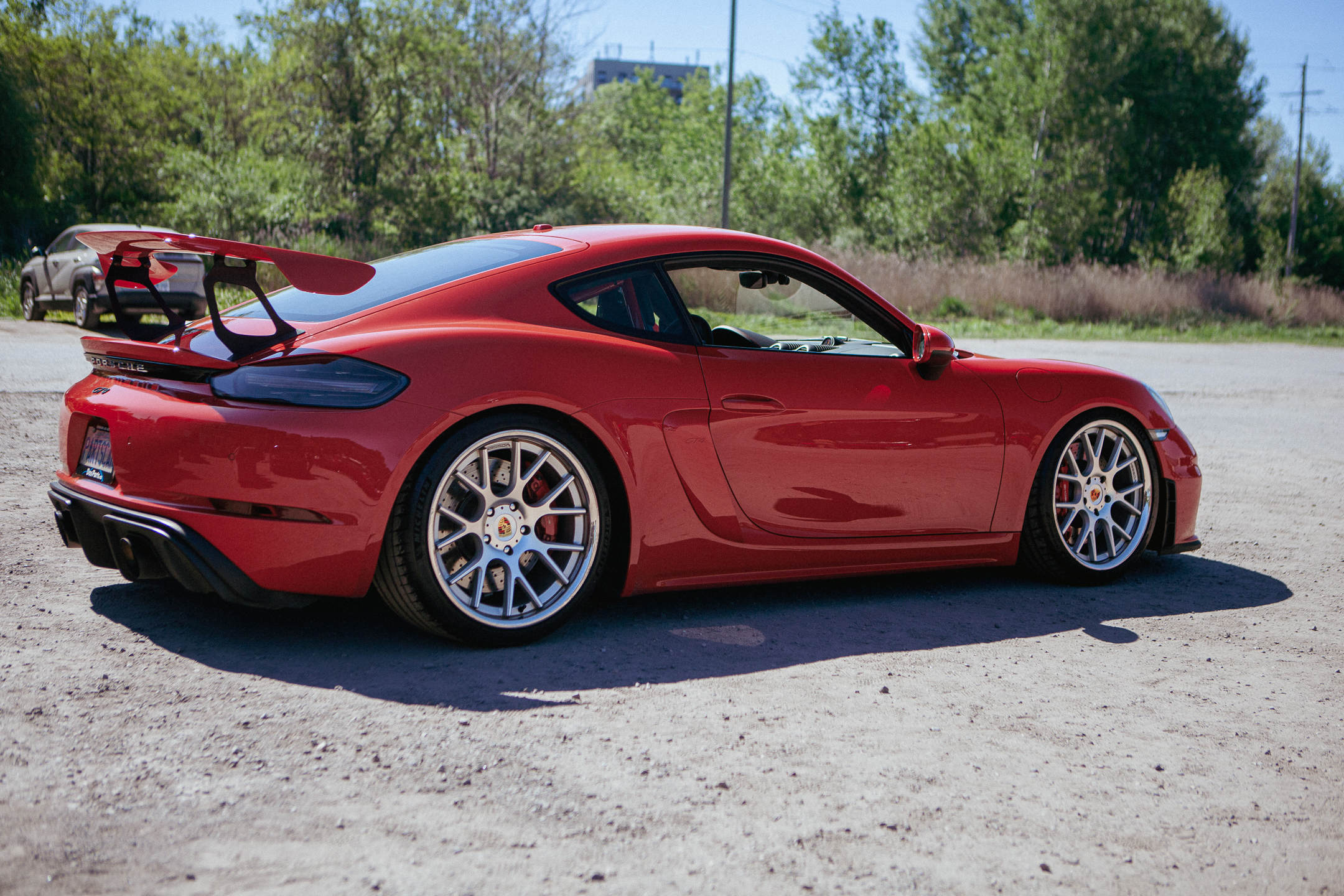
Elsewhere, the vibe was distinctly more European.
The combination of genres made the event feel especially worthwhile.
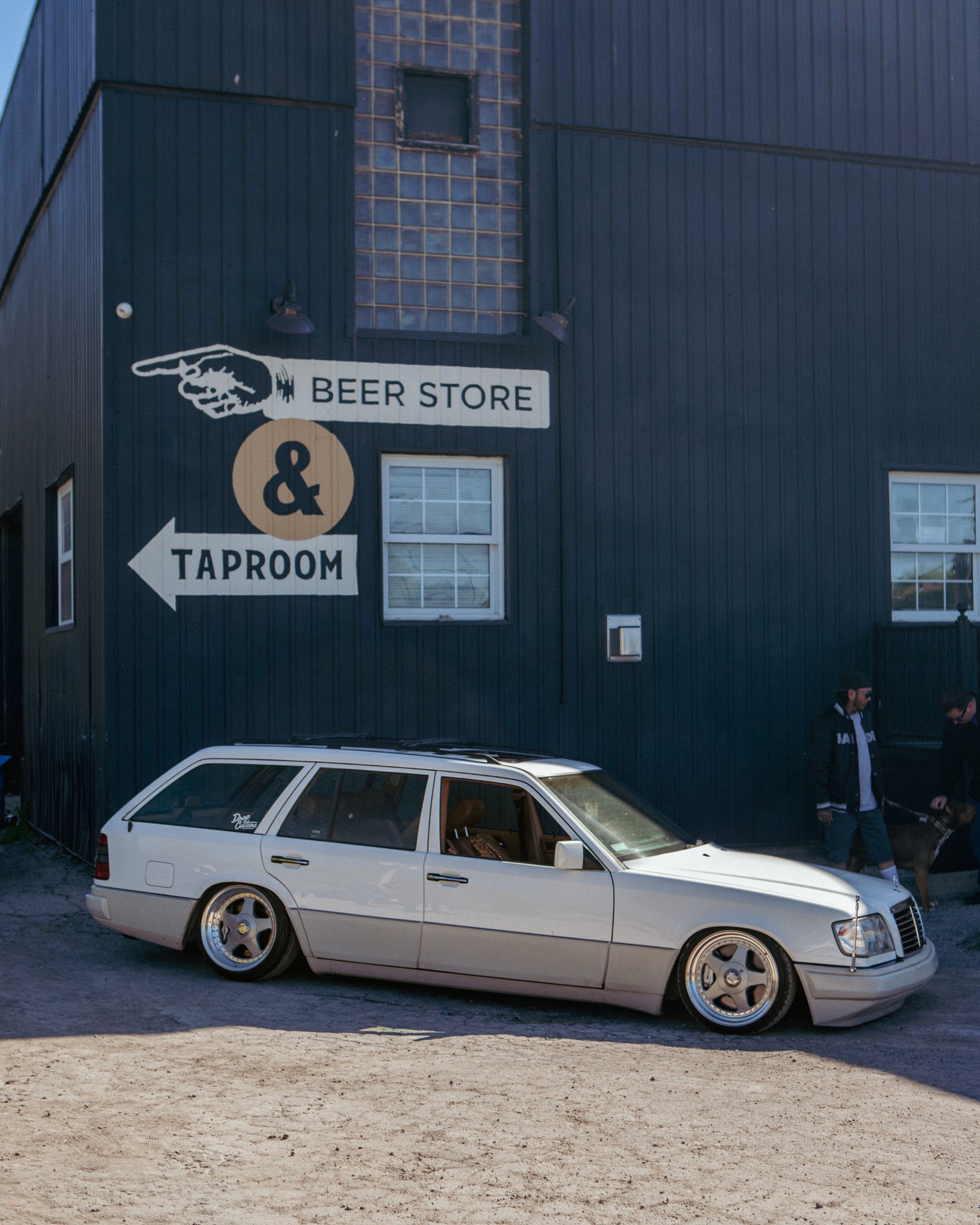
Four Fathers Brewing Co. was a great setting for the event. The building itself served as a strong backdrop, and inside, the cold refreshments were a welcome pause between cars.
Perhaps most importantly, I was able to catch up with those I hadn’t seen in a few years. Events are just better when you get the opportunity to check in with friends.
As I mentioned, the demands on our time seem to grow every year, and I’m glad so many people are still able to keep their passion for vehicles alive — and steal a few moments to appreciate them.
I’m not sure what the next event Jess and Arthur have planned under Curated is, but I hope I’m able to make it.
I know I’m not the only one who found the morning to be a great start to what will hopefully be a strong season here in Ontario.
I’ll leave you with a few more photos. Be sure to follow Curated on social media for updates on the next event.
One of the publications I’ve been proud to contribute to since 2018 is Ontario’s own Autostrada Magazine.
Founded by Sean Patrick and Lucas Scarfone, Autostrada is a quarterly automotive publication focused on telling stories that go far beyond your average parts-list feature.
Fellow photographer Kenny Kroeker first introduced me to Lucas and Sean. Since then, I’ve worked with Autostrada as both a writer and a writer/photographer.
My work there always pushes me creatively because, as I alluded to in the introduction, I can’t just focus on the nerdy bits of the hobby. I have to help tell the story behind the vehicle—and more often than not, the vehicle itself takes a back seat to the owner’s journey.
In addition to the magazine, Autostrada also hosts events—some on track-focused, others built around community. Up until last Sunday, my schedule had never allowed me to attend either.
So when it was announced they’d be hosting a Cars & Coffee-style gathering at the Porsche Experience Centre in Pickering, I made it a point to be there.
The Porsche Experience Centre (Toronto) is the first Porsche Experience Centre in Canada. Open since June 2025, I wouldn’t call this event its grand opening—but I’d be surprised if any previous Cars & Coffee-style gathering there hosted as many vehicles.
Autostrada estimates there were more than 1,500 vehicles in attendance—and likely at least twice as many people.
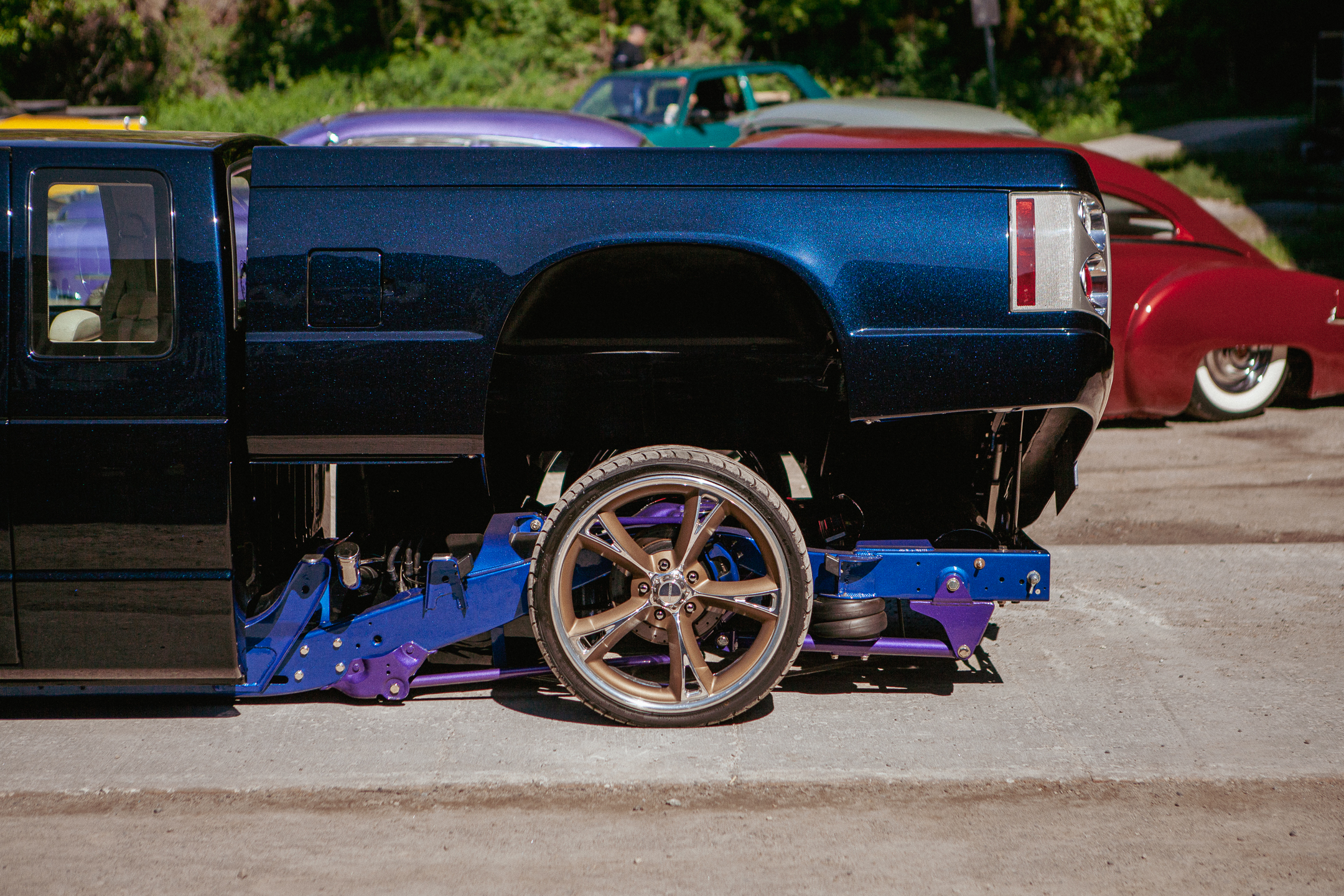
At an event made up mostly of exotic machinery, it was nice to be joined by a few American vehicles riding on air.
Built by Taylor’d Customs, Mike Livia’s ’59 Chevy Stepside was a major influence on my own. Patina, LS power, a clean interior—it’s not hard to see where I drew some inspiration.
However, the car I really geeked out over was this Buick LeSabre sitting on 15-inch Appliance Wire wheels. The owner sourced the car and wheels from separate estate sales, then finished the look with whitewalls, curb feelers, and air ride to create one seriously cool cruiser.
I was only able to stay for a few hours—and with a broken foot, I wasn’t exactly moving quickly—so what you see here represents only a fraction of a fraction of what was in attendance.
As the unofficial season opener here in Durham Region, it was great to run into a few familiar faces I hadn’t seen since the last stretch of sunshine, when the roads stayed free of rain or snow for more than three days in a row, and the temps were above 10 degrees celcius.
Autostrada and the Porsche Experience Centre truly deserve a hat tip for their efforts in organizing so many cars in one space.
The day wouldn’t have felt nearly as special without that dedication, and I’m sure directing traffic for as long as they did wasn’t part of the original plan.
Looking around, I know I wasn’t the only one spending more time walking, talking, and shaking hands than taking photos.
I had the opportunity to reconnect with people I hadn’t seen in years, while also introducing old friends to new ones.
As cool as the cars are, I really value the connections that outlast the vehicles themselves.
Given the reception this event received, I’d be very surprised if another one isn’t on the horizon. And if that’s the case, I’d love the chance to really cover it. You know, with two good feet.
Don’t worry, I still took a lot of photos regardless. Enjoy.
This article was originally published on Speedhunters October 29th 2018
I’m sure I’m not the only one who’s had a large part of their life shaped by a love of cars. The connections, encounters and experiences that I’ve had on my journey as a car enthusiast have been incredible, and the people I’ve met equally so.
Yes, this can be said about almost any hobby, but I’m sure you’d rather have me talk about cars than needlepoint.
I met Ken, the owner of the car we’re looking at here, a few years ago at a local Cars n’Coffee Toronto event. Outside of cars, we share a lot of similar interests: BMX, hockey, and parenthood, to name a few. We also have family a few blocks apart.
Realistically, we may have eventually crossed paths outside of cars. Still, it’s much easier to introduce yourself to the guy poking his camera inside your car than it is to the stranger with a BMX shirt and headphones on.
At the time we first met, Ken owned a Toyota Celsior. I thought the car was absolutely stunning, which is why I’ve included photos of it in this post. Done in a very traditional, some might say ‘old school’ VIP style, it was classy, timeless and mature.
As good as I thought the car was, Ken assured me he could do better. His sights were set on a more exclusive platform, the platform he said he should have bought immediately when changing gears from tuner builds to VIP.
That car was a JDM Toyota Century – he just had to find one available for import.
Japanese Rolls-Royce
The Century remains Toyota’s flagship car, a top-of-the-line personal limousine rarely seen outside of Japan. In Japan, its use is often reserved for dignitaries, including high-ranking government officials and CEOs.
The second-generation model was produced, nearly unchanged, from 1997 through 2016. Despite being produced for so long, very few exist outside of Japan, and as we cruised from spot to spot, ushered along by the eerily quiet V12 up front, several onlookers pulled up alongside to ask what it was. ‘Is it some kind of Rolls-Royce?’ seemed to be the most common question.
As a car you’re meant to be driven in, Ken’s Century has amenities not found in many of the vehicles I’ve photographed – and especially so for one built in 1997. The Toyota features front and rear CRT GPS screens, front and rear audio controls, and even a factory ottoman built into the passenger front seat. The seats themselves are extremely plush wool cloth, and front and rear recline.
It might be more comfortable inside the Century than it is in my own living room.
Late Nights on Yahoo! Auctions
When Ken’s Century arrived via boat from Japan, he had already collected the prerequisite wheels and a drop. Always intended to be a VIP build, a properly laid-out stance was fundamental.
Air Lift Performance suspension can be found at all four corners, with a neatly executed Air Lift 3P setup in the trunk. In the current VIP realm, the 20-inch Enkei Classic wheels might have a conservative width and offset, but Ken wanted to avoid fussing around with the factory fenders, or worse, the factory paint. Stretched tires and excessive ride height camber are also not for him.
Playing off the subtle wheel choice, Ken added an equally subdued Freedom Legion lip to the front end, and out back, you’ll find SilkBlaze exhaust tips. The factory headlights and taillights have been replaced with later OEM GZG50 units, and Ken also has a set of authentic illuminating Japanese license plates, reserved only for show or photoshoot use.
Like most VIP builds, Ken has opted to leave the V12 stock. Given how rare and unusual the engine is, I can’t say I blame him.
Ken’s currently mulling over the idea of adding a body kit to the Century, though it’s not a priority by any means. While he’s considering his options, he’s focused attention on accessorizing the interior.
The collection of OEM GZG50 Toyota Century factory-option parts he’s gathered is pretty phenomenal. So far, it extends to a cassette player, a shaver, and a car phone – items (often made by Sony) that Toyota had branded just for the Century.
One item that is not specific to the Century, but incredibly interesting nonetheless, is a Toyota-branded facsimile machine. Ken doesn’t know what model it was made for, but it totally suits the interior he’s put together.
I’d love to tell you whether or not it works, but I’ve never really been important enough to need to send or receive a fax, let alone from the back of a moving vehicle.
The lace you see on the top of the seats is typical of taxis and limos in Japan, and its purpose is to keep the seats and headrests clean. Similar lace makes up the curtains fitted to the rear windows. Again, everything is fashioned around luxury and the travelling experience.
To celebrate the realization of his dream to own and modify a Toyota Century, Ken is currently embarking on a journey from the Toronto area to Las Vegas, stopping in at several different events along the way. In Vegas, he’s graciously offered to pick up yours truly before we both head to SEMA.
The car isn’t in the big show this year, but if Ken does follow through with some of the body modifications, who’s to say what the future might hold?
This article was originally published on Speedhunters October 26th 2020
I don’t think there’s a single person among us who would say 2020 has gone to plan. Feel how you wish about the reactive measures that governments around the world have taken in response to COVID-19, but they’re here for the foreseeable future.
Virus ignored, socially and politically, it’s also been one hell of a year. I’m not sure about you, but the lens I view world news in has shifted from ‘what’s new?’ to ‘what now?!’. But silver linings exist within most forms of calamity, and the world slowing down has, in the very least, provided all of us with more time and more perspective.
With life outside of automobiles becoming more troubling by the hour, our beloved hobby has become a very welcome and needed haven of normalcy. Quarantines have made the streets barren, and with race tracks feeling the squeeze of social restrictions, they’ve been practically begging people to come and use them.
If showing your car is a priority, then 2020 hasn’t been your year, but those who want to drive their cars have found themselves in a somewhat fortunate situation.
Enjoying The Ride While It Lasts
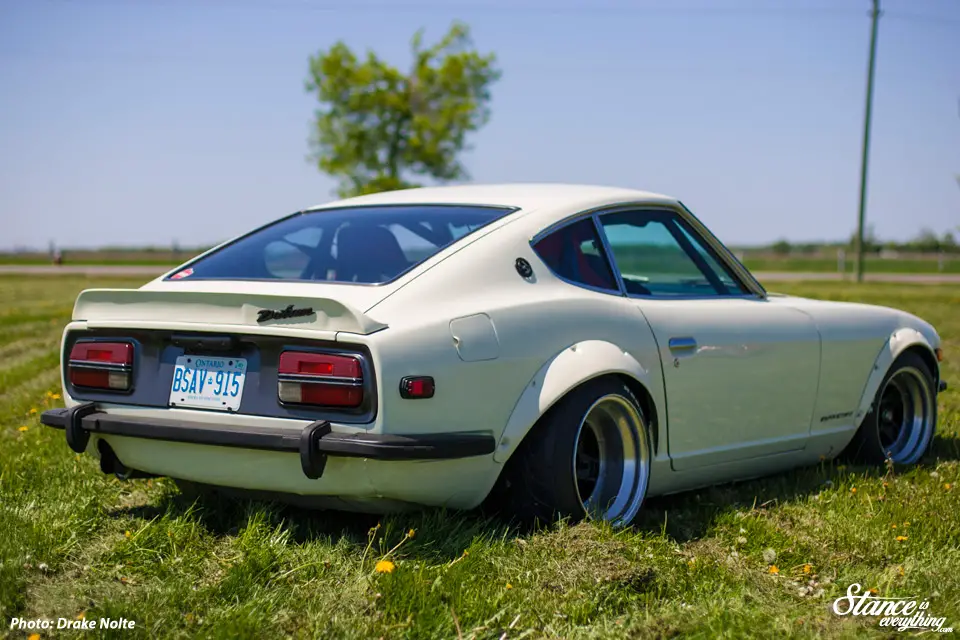
As it has for all of us, 2020 has thrown Tim Corbin, the owner of this 1972 Datsun 240Z, a series of curveballs. Instead of focusing on those wild pitches, however, Tim has used the extra hours they’ve afforded to enjoy the car he’s built more than he would’ve been able to had the world been operating at full speed.
Because normally his life involves considerable amounts of travel, Tim has always been the type to drive his car rather than look at it sitting still. In fact, the first time I saw the car, it was parked outside the show, and had I not walked out when I did, I would have missed it.
The seasons here in Ontario, Canada, can be pretty short, so staring at the car behind a velvet rope has never been anywhere near a priority. Like many with this same mindset, Tim’s also not much for social media. He uses it, sure – it’s an almost unavoidable entity at this point – but his use centers around connecting with others who have similar interests.
As a result of no real desire to enter shows, or overly broadcast the car, it keeps a relatively low profile despite, in my opinion, being one of the best looking Z cars in the province.
When Life Offers Stillness, Be Still
This car is, at its core, perfect Speedhunters subject matter: It’s honest, tidy, and most importantly, extremely usable.
Power options for Datsuns are plenty – even within Nissan’s own family of engines – but Tim didn’t buy this car to strip it of its character or occasional whiff of unburnt petrol.
An L28 remains under the hood, and it’s the same one Tim purchased the car with. Unfortunately, shortly after he took ownership, a pesky oil leak led to a diagnostic teardown. While apart, Tim had the motor stroked to 3.0-litres, and on reassembly, triple Mikuni carbs were fit to a Mikuni manifold.
The straight-six symphony is piped through a titanium exhaust fabricated by the same talented madman behind this 1JZ-powered E46 M3. Plans were laid to do some headwork on the engine this year, but given 2020’s unpredictability, well enough has been left alone for now.
Driving the car more made Tim realize that there was really no reason, currently, to change a motor that’s proving to be quite well sorted.
So, anticipated headwork downtime was replaced with well-enjoyed seat time.
It’s A G Thang
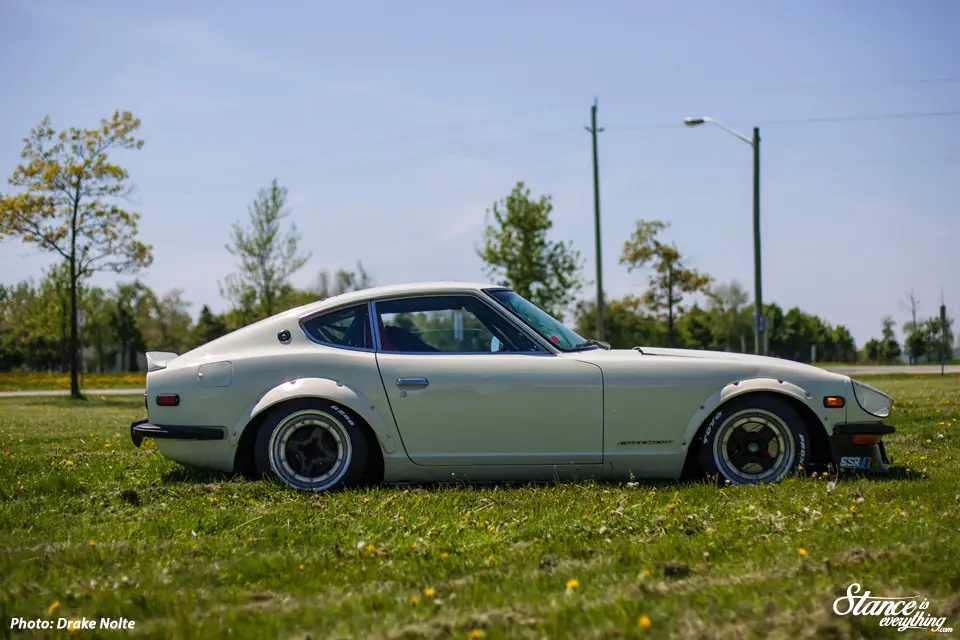
While processing these photos, I found myself really taking in how impactful the G-nose front end is to the overall design of the 240Z.
When paired with the right modifications, like the authentic Marugen Shoukai Works fender, lip, and spoiler package, the Z looks almost exotic.
Overall, there isn’t really a single modification to this car that I would deem out of place.
‘Timeless’ is a bit of a feature-writing hyperbole, but cars like this are where the look originated, and in this setting, they are truly a timeless usage.
Equal era-appropriate care has been taken inside; Bride seats of a fitting vintage are fastened to the floor boards, backed by an Autopower roll bar. A simple Nardi wheel and woodgrain shift knob provide driver touch points.
Techno Toy Tuning provides many of the suspension updates, including a triangle strut tower brace under the hood, and a more traditional 2-point brace in the rear.
Ground control adjustable coils bring the ride height down and are paired with Tokico Illumina shocks. The front control arms are billet pieces from FutoFab, and the rear arms are once again Techno Toy Tuning.
Cruising around, the ride is as you might expect – firm but not bone-jarring. It responds to being pushed on the track, but doesn’t punish on the street.
Leaving A Mark
The Z doesn’t exactly walk lightly thanks to very wide 15-inch Watanabe wheels affixed over Wilwood discs up front and factory drums in the rear.
From both a visual and performance perspective, Tim isn’t much a fan of aggressive stretch, so finding tires that fit both the wheels and flares wasn’t an easy task.
After searching high and low, Pirelli P7 Corsa Classic tires were selected due to their availability in healthy 235/45R15 up front and an insane 305/35R15 in the rear.
The P7 is actually a tire designed for rally applications, and getting a set imported and fitted required a hoop or two to be navigated. But I’d wager you all agree they were well worth navigating; the stance of this car is an absolutely function-oriented thing of beauty.
I do try my best not to be an envious man, but as I rode shotgun, I couldn’t help but feel jealous that Tim had this car to help him get through the ridiculousness of 2020. It’s hard to focus on the news when a straight six under the hood is begging you to push the throttle down just that little bit more…
This article was originally published on Speedhunters June 19, 2019
“Race cars are cool, but street cars are where it’s at.”
Those were the words Mike Catell said just before we turned onto the highway, and he set up to show me exactly why cars that can be driven on the street and the track are his favourite. Hanging out in second gear, allowing the exhaust to make all the right popping noises, he waited for the car in front to become a speck in the distance before pushing the skinny pedal to the carpet.
With a slight squat and a surprising lack of wheel spin, the car happily and quickly went from cruising speed to overtaking velocity in very short order.
A few clicks of the signal lever later, and we were in the fast lane, where Mike got off the throttle, and we cruised quite comfortably to the photoshoot location. Windows down, radio at half volume, and leather seats semi-reclined, I could see why Mike loves this car so much. It could transform from rowdy to civil and back again at the drop of a gear.
“I drive it as much as I can; it’s one of my favourite cars to take out,” he says. Considering Mike’s current daily fleet consists of a 1.8T-powered BMW E30 and a Cummins-swapped Chevy C10, among other oddities, that’s saying a lot.
In the BMW world, Laguna Seca Blue M3s are a bit of a sacred thing. They’re blue in some light, aqua in others, and bordering on teal when the sun hits them just right; it’s a colour that’s nearly impossible to hate.
The colour and generously proportioned rear end have earned the M3 a nickname of ‘The Blue Beluga’.
Mike’s E46 proved to be a fan favourite in the street, with a few thumbs up, challenging revs, and honks as we passed by.
The paint, wheels, and stance prevent the car from being classified as a sleeper, but none of the exuberant onlookers probably expected it to be much more than an M3 with wheels, drop, and an exhaust.
Self Motivated
At low RPMs, this car is pretty good at holding its secrets close to its chest. But I’m sure with the photo above, every one of you is already hip to part of the hidden weaponry.
If you assumed there’s forced induction in the mix, you’d be right. Obviously, the large intercooler gives that much away, but along with no longer being naturally aspirated, the E46 it is also no longer powered by BMW.
BMW purists, be cool – when Mike got this car, the factory S54 was long gone. Rather than find another one or drop in an LS, Mike replaced the original six with one he was already incredibly familiar with: the Toyota 1JZ-GTE VVTi.
Mike and the 1JZ have history, and it’s a motor that’s proven reliable under the conditions he expects a car to perform. That is, sideways with a cloud of tire smoke behind.
Mike’s 1JZ originally came from a JZX100 Chaser, but before this car, it powered his previous standard-trim E46. It was in that car that he figured out what worked and what didn’t with this swap.
Once that car was fit for pasture and his swap mounts were thoroughly tested, this chassis was acquired as a rolling shell.
Arriving pretty well in a shambles, Mike set out to get the M3 roadworthy over the course of a few months. No time to waste, efforts were focused under the hood first.
The 1JZ isn’t overbuilt, but it is specced to be reliable. CP forged pistons have been installed along with ARP head and main studs, and bolted to a top-mount manifold is a GT35 turbo paired with a 46mm wastegate. All the turbo, wastegate and coolant hard lines were plumbed up using piping and fittings from local supplier Vibrant Performance.
Managed via a Link standalone ECU, the BMW puts down 340hp at 15psi thanks to a BR Tuning base tune. They’re not crazy numbers, but this car wasn’t built for posturing or dyno pulls – it was built for reliability and skids.
Lots of skids.
As someone who build exhaust systems day in and day out at his shop, GT Custom Exhaust Oshawa, Mike couldn’t let the car scream through a basic set of blast pipes.
At first glance, tucked as tightly as possible to a carbon fiber CSL-style diffuser, the exhaust looks like it could be a mass-produced item, but it’s far from.
Coming off the down pipe is a custom exhaust that Mike put together using stainless steel and titanium components, also from Vibrant.
‘Functional art’ is the best way to describe the rear section Mike has built. The pie-cuts, the welds, the symmetry – it’s all an example of the work Mike is capable of when motivated and given complete creative freedom.
It’s Mike’s passion for cars personified within a single piece that most people will never see. Details like these are what separate a great car from just another car with a motor swap.
Not content with just the exhaust, all of the coolers have been custom-built or modified too. Mike is a big proponent of ‘weld every day’, and it damn well shows.
Style Cat
When it comes to building a drift car, both Mike and I agree that style is very important.
In the world of drift, there are several different approaches currently popular. You’ve got angle kit-equipped billboards sliding through FD, livery-draped cars running tandems at Final Bout, and near-death missile cars everywhere in between.
Then you’ve got cars like Mike’s; clean, simple and able to fit in anywhere.
In the looks department, Mike has actually done very little. BMW did a great job with the E46 and the stock fenders are wide enough to fit some properly sized wheels – Work VS-KFSs in this case – and matching rubber.
So, stock fenders remain and up front carbon fibre splitters hang on to the bumper for dear life. Tying the simplicity is a healthy ride height reduction.
Usually, on a car this low, especially an E46, one would expect to see quite a bit of camber in a photo like the one above. Traditionally, E46s have the spring and damper mounted separately from each other on the rear trailing arm, and even at factory height, the rear spring is quite short. Springs needed to bring the car down to this level are even shorter still.
With his former E46, Mike realized that his desire to be low didn’t exactly jive with the factory suspension. Raising the car would have been a way to fix this, but where’s the fun in that?
In addition to having no motor when it arrived, this car also had most of the rear floor ripped out of it. Rust is an unfortunate problem that plagues basically every E46 in Ontario.
While fixing and reinforcing the floor, Mike also beefed up the upper shock mounts. Fortifying the towers was necessary so that the car could be converted to a true coilover setup.
The rear coilovers were provided by Parts Shop MAX, a supplier that’s been helping Mike build low and functional cars for years. Above the coilovers is a permanent Catell-built tie bar that runs from one strut tower to the other.
New PBM upper and lower control arms help keep the wheels within a reasonable camber spec, allowing the car to grip up when Mike needs it to, be it in a straight line or sideways. Matching Parts Shop MAX coilovers can be found up front, pulling the car down to just a hair lower than the rear.
An argument could be made that all of the above is a heck of a lot of work just to get low, but when the car looks this good, I’d say it’s time well spent.
Creatures Need To Be Comfortable
Power? Check. Sound? Check. Looks? Check. The last piece of this car to address was the cockpit.
Here’s an area where Mike actually didn’t do much at all. While they’re not the most supportive things in the world, Mike couldn’t bear taking the peanut butter-colored seats out of the car – a decision this author fully supports. BMW nailed this colour combination and breaking it up for something like a black fixed-back bucket would be a tragedy.
Mike has fitted a deep-dish steering wheel and sturdy shift knob, but you’ll notice that the e-brake handle is stock. There’s no hydraulic unit here; Mike prefers to use weight transfer along with well-timed clutch kicks to get his car sideways.
The factory gauge cluster remains, and from the door sill up, things look fairly factory issue.
Door sill down, to keep an eye on what the Toyota motor is really up to, Mike has installed AEM, Defi and GReddy monitoring just forward of the shifter.
Looks, power, comfort, this car has everything you could ask for from a vehicle built for the street and the track. Oh, and it sounds damn good to boot.
You didn’t think that after so many key strokes talking about the sound of the car, I was going to let this feature conclude without video, did you?
Is there anyone out there who actually hates kustom cars? I’ve been posting photos online for nearly two decades now, and in that time I’ve seen just about every kind of feedback imaginable.
Some good, some bad—but if there’s one thing that’s always stood out, it’s this: kustoms might be the most universally loved style of automotive customization.
Why? Because nearly everything we celebrate today can be traced back to the pioneers of the kustom movement.
Chopped tops? A staple. Shaved handles? Of course. Body drops? That’s just a modern take on a channel job. Shaved emblems? Nosed and decked. Metal flake, pinstriping, scallops? They set the standard.
They didn’t just influence the scene, they defined it.
From day one, California has been the mecca of kustoms. Texas, Georgia—really any place with endless sun and people willing to work with their hands—has earned its respect. In recent years, thanks in no small part to the Mooneyes show, Japan has become just as idolized.
Ontario, Canada, on the other hand, probably isn’t a place most would expect to find a thriving kustom scene. Given the length of our season—and what our climate does to classic cars—it’s honestly a bit of a miracle we have a community at all, let alone one worth showcasing.
But we do—and I’m extremely thankful for it. Truth be told, in recent years I’ve mostly been reaping the benefits of the hard work put in by London Jay and Kenny Kroeker.
If you read my coverage of Sleds North 2024, then you already know they’re the two masterminds behind the event.
“Sleds” is, technically, invite-only. But don’t get the wrong idea—Jay and Kenny are in it for the love, not the recognition. There’s no elitist mindset behind the selections.
The cars don’t need to be perfect, and drivers are just as important as show-ready builds. The goal is simple: make sure the main attraction, year after year, is kustoms. Ontario has no shortage of shows dedicated to hot rods, rat rods, muscle cars, and imports.
For 2025, the event moved two hours west of its previous location to the beautiful Plunkett Estate in London, Ontario—the former home of the Fleetwood Country Cruise In.
It’s also the venue they’ll be returning to for 2026, and from a photographer’s perspective, I have zero complaints about that decision.
The estate itself is a showpiece, featuring a cobblestone laneway, expansive gardens, and a stunning fountain out front.
Like the 2024 venue, it’s spacious enough to keep the cars close together—so there’s no mistaking that everyone is there for the same reason.
But not so close that it makes proper profile shots impossible. These are big cars, after all, and their impact is best appreciated when you can take in the whole silhouette. That means giving them enough room to breathe—positioned in a way that lets each one be properly seen.
The well-kept front lawn also serves as a perfect showcase for the vehicles that couldn’t be positioned around the fountain.
As a car guy himself, Steve Plunkett is the last person who’d complain about a bit of singed grass from a hot muffler, so owners are more than encouraged to lay their cars out.
Over the years, I’ve come to know some of these cars—and their owners—fairly well.
Take Ricky D’s Bel Air, for example. I’ve seen that car all over Ontario, and I can attest that he absolutely drives the wheels off it.
Still, it’s rare that I get the chance to interact with everyone in one place, so I have to thank Jay and Kenny for making that happen.
I did have evening plans the night of Sleds North, which threw a wrench into my original idea of staying in the area all weekend. It turned into a bit of a hit-and-run visit—but I’d still take that over missing it entirely.
Honestly, any event that gives me another opportunity to check out Matt Hayes’ 1956 Ford F100 is worth the drive. This was my second time seeing the truck in person, and I think I did it far better justice with these photos than I did in 2024.
Under a cloud-peppered sky, the Ford’s Orchid Gray Poly paint looked incredible. Surrounded by equally impeccable company, it ended up being one of my most popular photo sets on Instagram in the days following the event.
I’ve written about John St. Germain’s “Mint Merc” 1956 Mercury Monterey before for Autostrada Magazine, but Sleds North 2026 marked my first time seeing the car outside the halls of Motorama.
It’s the details that truly set this car apart. Looking at the interior, it’s hard not to feel like we’ve lost something—modern dashboards are a far cry from the class and character of a proper ’50s layout. In this case John has swapped a 50s Oldsmobile dash in place of the Mercury one.
You can’t convince me the “screen in the middle” approach is better from an aesthetic standpoint.
With my deadline to leave quickly approaching, I kept my camera firing as I made my way back to the car. I wanted to stick around a few extra minutes, but if I did, not even the 407 would’ve gotten me to my next stop on time.
If the stars align this year, I’m hoping to spend the entire weekend in London, Ontario—so I can be part of the cruise to the venue as well. Because as great as these cars look sitting still, they’re even better in motion.
More photos from Sleds North 2025 are below, and with any luck, I’ll see you at this year’s event.
If you’ve been following me here, or anywhere else, you already know that coverage from the Motorama Custom Car & Motorsports Expo is something I’m known for.
As an automotive generalist, the variety at this Ontario event makes it one of my favourites each year. In fact, in recent years, it’s been the only indoor show I’ve attended.
I can shoot from the moment I arrive to the moment I leave, and somehow still realize I’ve missed something when I get home.
Last year I was so eager I even started taking photos while driving — I was that desperate for my annual reprieve from the winter automotive blahs.
Sure, I had an additional reason to be excited thanks to Zehr including me in their booth, but that’s the exception rather than the norm.
Traditionally, like most attendees, I’m a spectator admiring the work of others.
If you’ve seen one or two of these photos prior to this post, it’s because I’ve dropped a few here and there between last March and now.
Most of them, though, I kept in the vault because at the time I was contracted to another publication.
Sadly, that outlet ground to a halt before the majority of these photos could go live. Because those articles remained in draft form, I was also unable to archive what I’d written.
Hopefully, posting over 50 unreleased photos from the event makes up for not quite remembering what I wrote.
Motorama has seen a lot of success since taking over the coveted early-March timeslot. Much of that comes from constantly working to make the event better, whether through the addition of special guests or new displays.
In 2025, it was awesome to see space on the show floor reserved specifically for lowriders. Typically, there are always one or two sprinkled throughout the show, but in 2025 they finally had a real home.
After such a strong showcase, there should be no doubt about the quality of the Toronto lowrider community.
As always, the front hall was an impeccable display of some of the best builders in the country.
These builds, with countless man-hours invested, competed for the coveted Motorama Grand Champion award.
Builders tend to keep these projects fairly close to the chest all year, so you never truly know what to expect before entering the show.
A front hall favorite of mine from 2025 was Fabrizo Cella’s C10-R. Sitting on a Porterbuilt chassis, powered by an LT4, and tucking Billet Specialties wheels, it was a beautiful build from bumper to bumper.
Much like essentially every other year, Mississauga’s Chassis Stop debuted a vehicle that had me returning for second, third, and fourth looks.
On my fourth visit, I finally took the time to read the nameplate of what I was looking at: a Mazda 13B-powered Autobianchi Transformabile.
It’s a make and model I have no shame admitting I’d never heard of before. Chassis Stop, true to their name, put it on a bespoke custom chassis. They didn’t stop at just an FR conversion, though. They tubbed the rear, chopped the top, and added suicide doors.
There simply isn’t another Autobianchi like it anywhere.
Finally, seeing my longtime friend debut the custom chassis arm of his shop, Issyfab Speed LTD at Motorama made a great 2025 event even more enjoyable.
I’m a big fan of seeing my friends do well, and seeing him succeed on such a big stage was outstanding.
I could likely continue to wax poetic about how great last year’s event was, but with the 2026 show approaching fast this Friday, March 13th, I think it’s best if I just leave you all with a few more photos to scroll through.
Unfortunately, I managed to break my foot and have surgery scheduled for this coming weekend, so I don’t think I’ll be able to make it to this year’s event.
But I might see if I can pin someone down for a bit of guest coverage. Cross your fingers for me — and maybe a toe, since I won’t be able to.
This article was originally published on Speedhunters June 27, 2018.
Accurately communicating what car culture truly is can be challenging. It goes beyond just knowing about cars and attending gatherings; the culture is deeper – something lived, shared, and experienced.
Many events lack the magic that makes car culture special. Often, they seem like moneymaking ventures for promoters, devoid of the passion and camaraderie that define the best gatherings.
Great events focus on more than just showcasing cars and dishing out trophies. They celebrate community – people bound by a shared love for cars, regardless of their differences.
These true enthusiasts are the ones who’ll bring you a jerry can in the middle of the night when you run out of gas on your project’s maiden voyage. Any thanks are brushed off with a casual “Yeah, my fuel gauge doesn’t work yet either.”
My most recent experience of everything that makes car culture so special was at Sleds North 2024 – Canada’s only invite-only Kustom car event.
Chapter Two: Kommunity
Sleds North is the brainchild of two veterans of the Ontario car community: automotive and commercial photographer Kenny Kroeker and kustom car enthusiast “London” Jay Handsor.
Without their shared passion for cars, these two might never have crossed paths. And without their deep appreciation for the people and culture of hot rodding, Sleds North would never have come to life.
But Sleds North is far from a solo effort. Key to this year’s event were Fred Botcher and Jill McIntosh, who generously offered their property as the venue. Jill, a well-regarded automotive journalist – who won’t let you leave without a full stomach – and Fred, one of the most genuine car guys you’ll ever meet, form the backbone of this gathering.
Fred, who’d gladly give you the shirt off his back to help you down the road, also drives a stunning gold ’57 Cadillac powered by a 440 six-pack motor. You’d never know it, though, as his hood stays closed 95% of the time. I’ll get to the reason why soon.
Kenny, Jay, Jill, and Fred appreciate most vehicles, but their true passion lies with traditionally styled builds.
The turnout at Sleds North 2024 proves they’re not alone in Ontario. However, without this event, it’s unlikely all these stunning cars would gather in one place at the same time.
More a gathering than a show, Sleds North is about catching up with friends and living the culture. The event spans two days: the first features shop tours, and the second – documented here – is loosely called the ‘show.’ I say loosely because only a handful of participant-chosen, handmade awards are handed out.
Chapter Three: Presentation Is Everything
You’ve probably noticed Sleds North doesn’t resemble a typical car show. This is entirely by design.
The layout is reminiscent of how a child might arrange their Hot Wheels collection. Some areas are loosely organized by year, others by style, and the rest just look cool side by side.
This unique approach is a photographer’s dream. You’re never far from something visually striking, and there’s never anything out of place in the background.
The absence of stanchions and the need to walk right past one vehicle to admire another means details that might be overlooked at other events are properly appreciated.
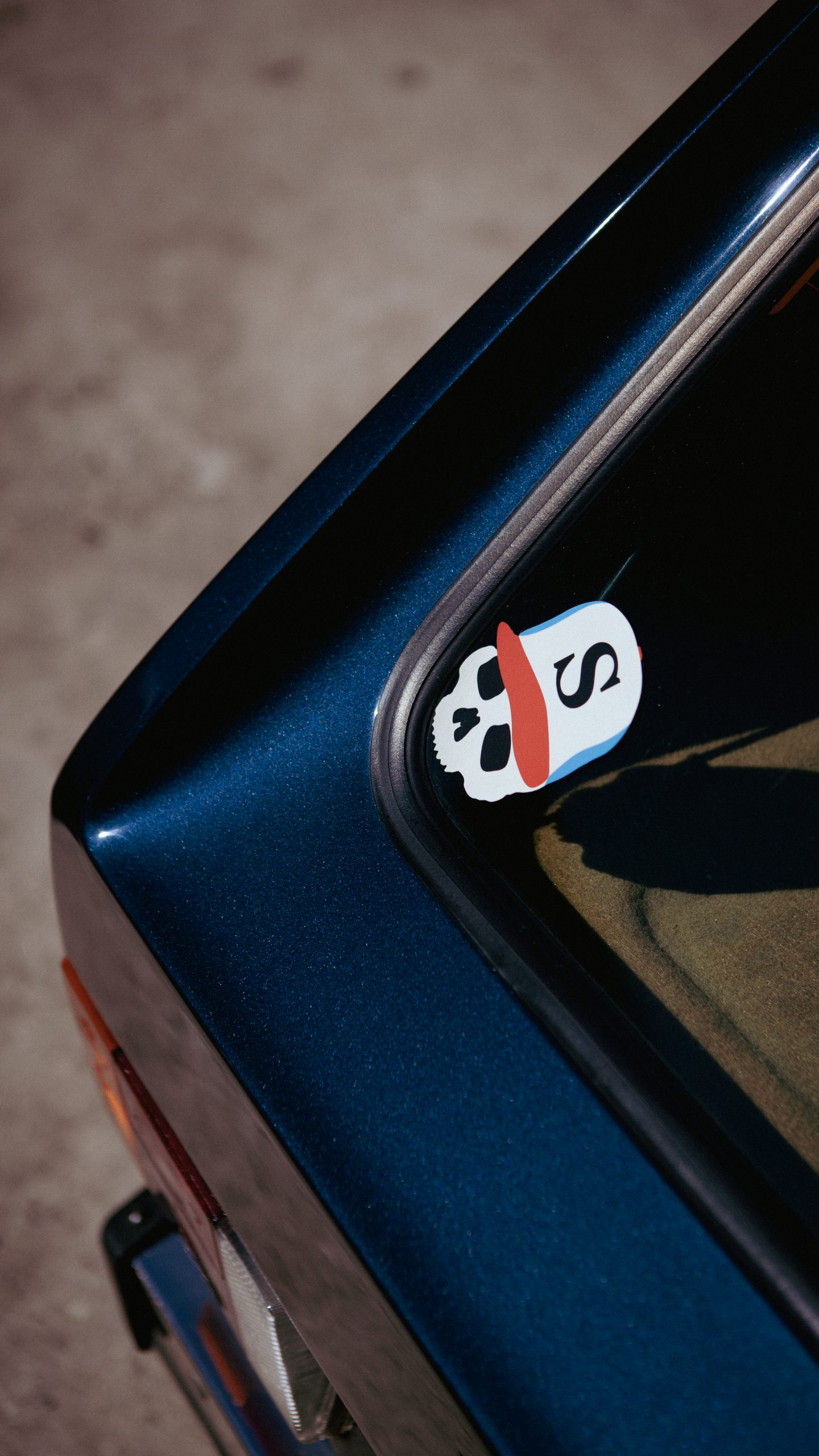
Stopping to notice a detail – a sticker, a scratch, a scuff – sparks conversation and inspiration.
If the cars were parked further apart and roped off, many incredible interiors would likely go unnoticed.
One of the few presentation rules stood out: hoods closed. Unlike most shows, where it’s customary to pop your hood and walk away, at Sleds North, if you open your hood, you’re expected to close it soon after.
Why? Simply put, a field of cars with their hoods open wouldn’t look as good.
In this genre of automotive modification, style takes precedence over performance. You could argue that this is the defining genre where aesthetics trump everything else – a notion that still ruffles some feathers today.
People can argue all day that a chopped top, Lexan windows, and missing wipers aren’t as safe and don’t make the car faster, but those critiques often fall on deaf ears.
So, who’s right in this debate? Well, a display card on Jay’s dash succinctly addresses the matter. Don’t mistake these cars for lacking performance upgrades however.
Take, for example, this Mercury, which hides a NASCAR-spec V8 beneath its understated exterior. Much of the suspension came with the engine, and the only clues are the tire sizing, license plate, and the aggressive bark when the V8 fires up.
Chapter Four: The Same, Yet Different
As I wove through the cars, it was fascinating to see how each took inspiration from the same era, yet none could be called cookie-cutter.
Traditional Kustoms follow a loose set of guidelines, and even those are up for interpretation.
Pinstriping, louvres, chopped tops, and sectioned bodies are common but not mandatory.
Exhausts can be completely hidden, tucked down the side, or, in the case of this ’56 Ford F-100, run through the bedside and right before the bed rail before exiting at the rear.
Paint treatment varies widely, too. It can be glossy and flaked or satin, heavily faded, or worn away by years of use.
With not a trailer in sight, every car here was driven to the event, some from as far away as Michigan. This raises a question: Is it better to keep your vehicle pristine and off the road or to drive it and accept the inevitable wear and tear?
That’s a debate we could have for years.
Chapter Five: One of One
Before I go any further, I want to spotlight this 1967 ‘Ferguson Super Sport,’ a scratch-built creation by Ross Ferguson and his wife, Blanche.
Ross was involved in Canada’s famous yet ultimately ill-fated Avro Arrow superplane, where he helped create tooling for the turbojet engines. He used this experience to build his dream car at home in his garage for over a decade.
Beneath the hand-laid fibreglass body lies a tube frame reinforced with X-shaped cross members. The car features independent suspension front and rear, utilizing MacPherson-style struts and longitudinally mounted torsion bars.
Powering the Ferguson Super Sport is a Ford 289ci V8 crate engine paired with a three-speed manual transaxle.
The locally cast magnesium wheels are mounted via knock-off hubs – complete with a custom socket Ross fabricated himself.
Today, the car is cared for by Chris Atkins. For those interested in a deep dive into the build, a thorough article can be found here.
Being in the presence of something so unique was truly special. It serves as a reminder that there are no limits to what someone with determination can achieve in their garage.
Final Chapter: Bigger And Better
With the 5th Sleds North set for 2025, the plan is for the event to continue growing year after year, while maintaining its unique appeal.
While the event might be the brainchild of Jay and Kenny, its true ownership lies with the community that fuels it and the culture they represent.
If you want to be part of Sleds North 2025, the best way is to enjoy your car. Jay and Kenny personally hand out physical invitations, so don’t keep your ride under wraps. Bring it out for the world to see, because kustoms are always better when you drive them!
For a province that doesn’t exist within the DC Universe, Ontario has a peculiar number of 1:1 Batmobiles. There are at least two Keaton/Burton Era Batmobiles on the road, and soon, thanks to Fugitive Custom Cars, two West Era/Barris cars.
Contributing two to the local streets one might Fugtive is known for building “Star Cars”.
Jason Roberts is a hot rod guy, not a nerd like me, and when he started Fugitive Customs, his goal was to be involved in building as many high-quality vehicles as possible.
Jason Roberts is a hot rod guy, not a nerd like me, and when he started Fugitive Customs, his goal was to be involved in building as many high-quality vehicles as possible.
His friend Ian McIntosh however, he’s a nerd and the one that has commisioned Fugitive to build rowdy versions of popular cars.
I was first introduced to Fugitive Custom Cars on Instagram via a photo one of the two Batmobiles early on in the build process. I desperately tried to find more information about it and, at the time, not a lot more was to be found.
Last year at Motorama 2025 I learned what I saw as an earlier version of the car now known as ‘Bat-Gas’.
Done by another party, the first hand-formed aluminum body, wasn’t quite up to Fugitive standards. However, it was still very much a Batmobile, so the choice was made do something no one else would think to do. Build a 632-cubic-inch, 1000+ horsepower big block powered, Batmobile-shaped, ‘drag’ car.
There’s currently no intention to take Bat-Gas down the strip, but it does run, drive and burnout with ease.
Think of the car as a “fairground cruiser,” a concept popularized by the over-the-top Pro Street movement of the 80s and early 90s.
After the custom chassis was complete and the body was mounted, Fugtive commissioned Rollie Guertin to pinstripe the vehicle, and Bat-Gas was easily one of the most talked about and photographed builds of the Motorama 2025.
The black car, ‘Bruce’s Tow Vehicle’, is everything Bat Gas was originally intended to be: black, clean, low and fast.
Looking more like the screen car, on steroids, the Tow vehicle features a second hand-fabricated body, this time done by Vintage Tin and painted by Rich Refinishing.
Another custom chassis is employed, this one featuring Corvette front and rear sub-frames. Air suspension brings the flared fenders down over Radir wheels that hide a Wilwood brake setup.
The motor is a stroked Chevrolet LS1 V8 fit with a D-1SC Procharger dyoned at 853.7 HP.
While Bat Gas is generally considered finished, the black car still needed some buttoning up. I’m not totally sure if either will be at Motorama 2026, but considering the reception they received in 2025, I wouldn’t count them out.
Guess we’ll just have to tune in same Bat Time, same Bat channel March 13th, 14th and 15th.
This article was originally published on Speedhunters June 27, 2018.
I know each and every one of you reading this has a dream project, and to go with that dream project is a list of modifications aimed at making said vehicle better through aesthetic or performance upgrades – or a combination of both. Suspension, wheels, body, paint, power adders… the list is probably quite lengthy.
At the top are the basics and near the bottom are the more challenging modifications. But what happens when we get that car and make our way through the list only to discover that everything we thought we needed didn’t result in the car we wanted? Nearing the end of the road with his first S-chassis build, Mike Martino found himself in such a position.
For years, Mike built his S13 in the winter and drove it in the summer in Toronto, Ontario before starting the process all over again. The end result of this yearly cycle was an impressive 500hp, caged street car that, which in Mike’s own words, “had every modification ‘they’ tell you makes a better drift car.”
Looking back now, Mike describes many of those drift-specific upgrades as overkill and estimates he would have probably enjoyed the car more with less than half of them. Hindsight is a funny thing and his vision was only made 20/20 after a trip to Japan in 2015.
While abroad, Mike had the opportunity to experience several different cars on some of the best roads Japan had to offer. The car that left a lasting impression on him was an S15 Silvia Spec-R not at all unlike the one he owns today. That car was modified in several areas, but the owner knew when enough was enough. As a result, every modification, be it function or form, had a purpose.
On the flight back to Toronto Mike’s mind was set, and almost immediately after landing he went straight to ‘The Unit’ (the place he stores and works on his cars) to break down his S13.
Chapter Two: Starting Over
Within the space of about two weeks Mike had sold most of his S13 and used the money to put himself behind the wheel of an S15. To truly appreciate the differences between the two, he drove the S15 stock for a brief period of time, this evaluation period being used to figure out what modifications would improve the Silvia as a street and track vehicle.
Wheels and a drop are nearly every car guy’s go-to, so naturally Mike started there. The Spec-R models are already equipped with additional chassis bracing so most of the modifications have centered around adding points of adjustment. In this regard, Mike installed HKS Hipermax D coilovers, which not only addressed the car’s ride height but stiffened things up as well. Under the S15 are Parts Shop Max tension rods, Maxima inner tie rods and Tein outer tie rods.
One modification Mike didn’t add was an excessive angle kit. They might be all the rage in competitive drifting, but Mike is of the mindset that extreme steering angle isn’t necessary for his style of driving. His car is equipped with a simple drop knuckle setup from ERA-1 that improves suspension geometry, as well as giving him a few more degrees of angle over stock.
Adding a more drastic angle kit wouldn’t have allowed Mike to tuck 18×9.5-inch wide Work T7R wheels at all four corners, and that would have been a damn shame.
Chapter Three: Style Up
In terms of styling, Mike’s car is aggressive, but it does so without the use of flares, a big wing, or wild livery. Instead, he used late ’90s and early 2000s Japanese drift cars as visual inspiration. JDM builds from that era are what attracted him to drifting in the first place, and Mike hopes that in keeping that style alive he’ll inspire the next local generation to do the same.
To achieve the look of a car that is practically hovering, Mike took a Vertex body kit and made it even lower. The side skirts have had material added to them horizontally and vertically so that they’re both deeper and wider. It’s a subtle, challenging, change to execute but it makes a drastic difference in the car’s profile. An Origin Labo carbon fiber roof wing and D-Max wing add a bit of extra visual sugar to the rear of the car.
Up front, a vented hood and headlight eyelids give the car a menacing stare, while Final Konnexion under-canards and custom bumper canards help drive home the point that style is an important aspect of this car.
Inside, Mike has kept things clean and simple. There’s no cage to step over upon entry, the doors retain their panels, there’s still rear seating, and heck, even the power windows still work. Mike regularly drives the car out of country for drift events, so keeping the creature comforts intact was a necessity.
Mike’s seat is a red Bride Zeta II and he steers the S15 with a Vertex wheel. There’s also Nismo gauges, a Bee-R rev limiter, G Corporation checker mats, and a double-DIN headunit to control an audio system that features a removable subwoofer enclosure.
Chapter Four: K.I.S.S
Under the hood of this car isn’t a V8, nor a baby-eating turbo. There’s simply an SR20DET that’s received a few modifications to make it better handle the demand Mike puts on it.
Mike traded the already larger Spec-R intercooler for a Blitz front mount, added an HKS Super Power Flow filter, swapped the battery for a half size equivalent, and turned up the boost. As it sits, he estimates the 2.0-liter four cylinder makes somewhere in the neighborhood of 260hp.
Final Chapter: Don’t Talk About It, Be About it
If you think that’s too few horses in the stable to drift, think again. Mike is able to put that power to good use as he was more than happy to demonstrate at Drift Jam. High horsepower cars are cool, especially on paper, but there’s something to be said for a mid-power car that sees its entire power band used effectively.
The day these photos were taken the temperature was, 35°C (94°F), but the S15 performed without a hiccup lap after lap. And after being punished all day, Mike was able to flick his A/C on and close his inline exhaust baffle for a peaceful trip back home.
As much as I enjoy reading and writing about cars that push the limits of sanity, cars that excel at their purpose without breaking the bank are extremely compelling. In our own personal missions to build the car of our dreams, let’s not lose sight along the way of what matters in the end. The drive.
Used to distinguish new sessions and visits. This cookie is set when the GA.js javascript library is loaded and there is no existing __utmb cookie. The cookie is updated every time data is sent to the Google Analytics server.
30 minutes after last activity
__utmc
Used only with old Urchin versions of Google Analytics and not with GA.js. Was used to distinguish between new sessions and visits at the end of a session.
End of session (browser)
__utmz
Contains information about the traffic source or campaign that directed user to the website. The cookie is set when the GA.js javascript is loaded and updated when data is sent to the Google Anaytics server
6 months after last activity
__utmv
Contains custom information set by the web developer via the _setCustomVar method in Google Analytics. This cookie is updated every time new data is sent to the Google Analytics server.
2 years after last activity
__utmx
Used to determine whether a user is included in an A / B or Multivariate test.
18 months
_ga
ID used to identify users
2 years
_gali
Used by Google Analytics to determine which links on a page are being clicked
30 seconds
_ga_
ID used to identify users
2 years
_gid
ID used to identify users for 24 hours after last activity
24 hours
_gat
Used to monitor number of Google Analytics server requests when using Google Tag Manager
1 minute
_gac_
Contains information related to marketing campaigns of the user. These are shared with Google AdWords / Google Ads when the Google Ads and Google Analytics accounts are linked together.
90 days
__utma
ID used to identify users and sessions
2 years after last activity
__utmt
Used to monitor number of Google Analytics server requests